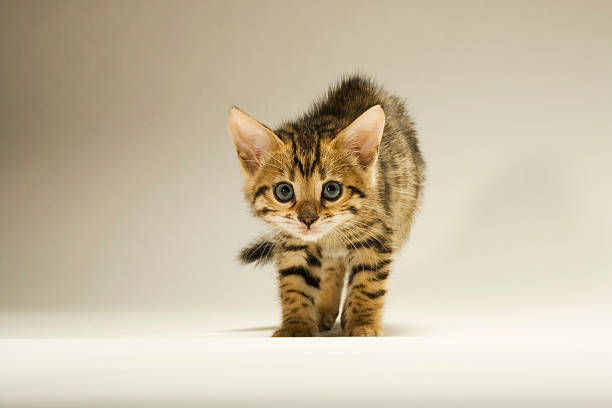
Exhibiting a striking, exotic appearance paired with sharp intelligence, Bengal cats are truly captivating companions. This unique hybrid breed is seeing a massive surge in popularity, largely because they offer a fierce, jungle-like aesthetic while remaining the manageable size of a typical large house cat. Their spirited, dog-like personalities make them stand out from more sedentary breeds. Originally established by crossing the wild Asian leopard cat with domestic staples like the Egyptian Mau or Abyssinian, they possess a rich genetic heritage. Below, we explore the fascinating history, care requirements, and energetic temperament that define these leopard-spotted felines.
Characteristics of the Bengal Cats
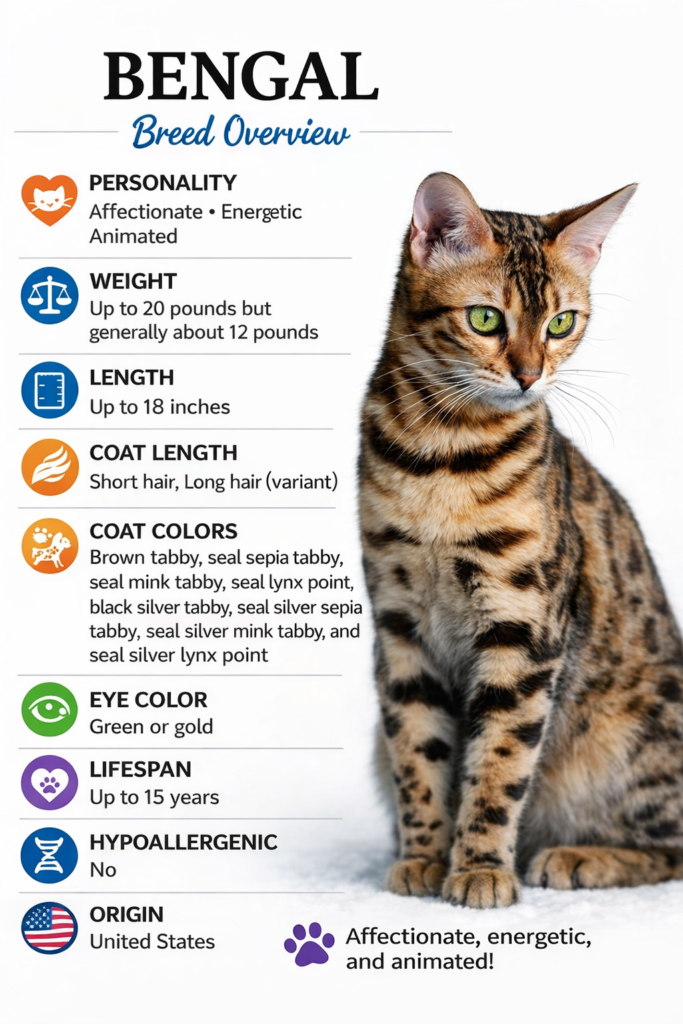
Despite their striking, primitive aesthetic that mimics their jungle ancestors, Bengal cats typically maintain a manageable size, rarely exceeding the twelve-pound mark of a robust domestic feline and reaching physical maturity within their first year. This breed is the perfect marriage of exotic beauty and a deeply engaging, charismatic temperament.
Known for being exceptionally social and spirited, Bengals thrive on interaction, forming strong bonds with children and seniors alike while usually integrating seamlessly into multi-pet households. Because they possess an incredibly high motor and sharp curiosity, they require ample space to jump, climb, and burn off their boundless energy, making them ideal for active families who enjoy an adventurous, interactive pet.
| Affection Level | High |
| Friendliness | Medium |
| Kid-Friendly | High |
| Pet-Friendly | High |
| Exercise Needs | High |
| Playfulness | High |
| Intelligence | High |
| Energy Level | High |
| Tendency to Vocalize | Medium |
| Amount of Shedding | Medium |
History of the Bengal Cats
Although earlier efforts existed to cross Asian leopard cats with domestic felines, the modern Bengal breed is primarily attributed to Jean Sugden Mill’s pioneering work in the 1970s. Mill refined the breed by acquiring hybrid specimens from Dr. Willard Centerwall, who had been researching their unique genetic resistance to certain diseases at Loyola University.
By meticulously backcrossing these hybrids with domestic breeds, she successfully captured the wild, “jungle” aesthetic while ensuring the cats possessed a gentle, affectionate temperament suitable for family life. Simultaneously, Greg and Elizabeth Kent contributed to the breed’s diverse gene pool by crossing leopard cats with Egyptian Maus, helping to solidify the striking coat patterns we see today. This collaborative history highlights the breed’s transition from a scientific curiosity to a beloved, high-energy household companion that fascinates cat enthusiasts globally.
To track their wild heritage, Bengal hybrids are classified by “F” generations, starting with F1, which signifies a cat born directly from an Asian leopard cat (ALC) parent. Subsequent generations—F2 and F3—trace their wild ancestry back to a grandparent or great-grandparent, respectively, as the bloodline gradually stabilizes.
By the F3 stage, these felines usually transition from their primitive instincts to a more predictable, domestic disposition suitable for home life. However, for competitive purposes, the International Cat Association (TICA) strictly mandates that only F4 generations or beyond—essentially those four steps removed from their wild origins—are eligible for professional shows. This ensures a consistent, friendly temperament across the breed. In the modern era, most breeders focus exclusively on these advanced generations, pairing established Bengal cats with one another to maintain their distinctive leopard-like spots while ensuring they remain affectionate, social members of the family.
The International Cat Association (TICA) initially classified the Bengal as an experimental breed in 1983, eventually granting it full championship status by 1993. Decades later, in 2016, the Cat Fanciers’ Association (CFA) also officially recognized the breed, marking a significant milestone in its journey toward mainstream global acceptance.
Furthermore, several other major organizations, including the American Cat Fanciers Association, the Canadian Cat Association, and the UK’s Governing Council of the Cat Fancy, have added the Bengal to their official registries. This widespread institutional approval reflects the breed’s successful transition from a controversial hybrid to a highly coveted domestic companion. Today, these feline “house leopards” are celebrated worldwide for their striking marbled or spotted coats and their uniquely active, intelligent personalities, making them one of the most recognizable and prestigious breeds in the modern cat fancy community.
Bengal Cats Care
Modern Bengal cats are typically several generations removed from their wild ancestors, meaning they function essentially as large, high-energy house cats requiring no exotic specialized care. Routine grooming remains simple; a weekly brushing session is usually sufficient to minimize shedding and prevent the uncomfortable formation of hairballs in their sleek, pelt-like coats.
Additionally, keeping their nails trimmed every two weeks and maintaining a pristine, daily-cleaned litter box are fundamental to their well-being. Because of their athletic nature and innate desire to climb, it is vital to provide floor-to-ceiling cat trees or wall perches that allow them to survey their territory from a height. Since these are highly intelligent, social creatures, you should also invest in various interactive puzzles and dedicate daily time to collaborative games like fetch or chasing laser pointers, ensuring their sharp minds and muscular bodies stay adequately stimulated.
Unlike the typical feline aversion to getting wet, Bengal cats often possess an intense fascination with water, a quirky ancestral trait that sets them apart from most domestic breeds. This aquatic curiosity means you must be vigilant with home aquariums, as your pet might view your fish tank as a private fishing pond rather than a decorative feature.
If you have a securely fenced outdoor space that prevents any chance of escape, providing a shallow backyard pool can offer hours of refreshing entertainment for these energetic swimmers. However, it is strongly advised to keep your Bengal strictly indoors to ensure their safety and longevity. This controlled environment protects them from various outdoor hazards, such as contracting infectious diseases, engaging in dangerous territorial fights with local strays, or falling victim to passing vehicles and larger predators. By keeping them inside, you provide a secure sanctuary where their bold, adventurous spirit can thrive without the life-threatening risks associated with the wandering outdoor world.
Common Health Problems of Bengal Cats
Your Bengal requires the exact same vaccinations and preventative medical care as any standard domestic cat to ensure a long, healthy life. Contrary to popular myths, they do not inherit the Asian leopard cat’s natural resistance to the feline leukemia virus (FeLV), leaving them vulnerable without proper shots.
Because purebreds typically come from a more limited gene pool than diverse mixed-breed felines, they often face a higher risk of inheriting specific genetic health conditions. To mitigate these risks, it is vital to work with reputable breeders who perform extensive health screenings, ensuring your high-energy companion remains free from common breed-specific ailments like heart issues or joint problems throughout their adult years.
Some of the conditions Bengal Cats can be prone to include:
- Autosomal recessive disorder, which causes early blindness in young cats2
- Entropion (the rolling in of the eyelids)
- Hypertrophic cardiomyopathy
- Feline infectious peritonitis, a deadly disease that results from a coronavirus infection3Feline Infectious Peritonitis (FIP). Merck Veterinary Manual.
Appearance of Bengal Cats
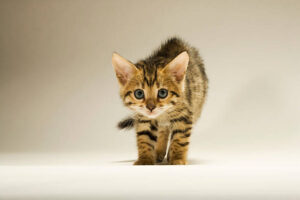
Bengal Cats are characterized by their substantial, muscular physiques, elongated facial features, and prominent ears. While a short-haired coat is the standard, a long-haired variety also exists; however, potential owners should note that this breed is not considered hypoallergenic.
Beyond their build, these felines are most celebrated for their exotic, wild-inspired aesthetics. Though individual cats may display a range of rosettes, spots, and stripes, official breed standards recognize only the spotted or marbled patterns. These intricate markings are typically defined by bold outlines in shades of black, chocolate, or silver. This unique “pelt” often has a shimmering, glitter-like quality in the sunlight, further enhancing their resemblance to miniature leopards and making them one of the most visually stunning breeds in the domestic cat world.
The Bengal Cats palette features a diverse range of official coat colors, including the popular brown tabby, along with specialized shades like seal sepia, seal mink, seal lynx point, and various silver-based tabby variations. Their intricate markings typically consist of deep brown to obsidian tones, while the traditional brown tabbies are noted for their crisp white fur on the whisker pads, chest, and underside.
These striking coat patterns are further elevated by their piercing, expressive eyes, which are usually found in vivid shades of gold, amber, or emerald green. This combination of “glittered” fur and intense eye color creates a stunning, wild-inspired aesthetic that perfectly complements their high-energy and inquisitive nature, making them a true centerpiece in any household.
Diet and Nutrition
While Bengal Cats generally consume the same types of commercial cat food as any domestic feline, their dietary needs can be more nuanced. Many dedicated owners opt for grain-free or raw-food diets—especially for those closer to their wild ancestry—to better mimic their natural biological requirements.
For the average pet owner, a high-protein, grain-free formulated diet is typically the most convenient and balanced way to ensure these high-energy cats receive proper nutrition. Choosing a premium brand without fillers helps support their lean muscle mass and maintain that signature “glitter” in their coat, keeping them healthy and vibrant throughout their lives.
Where to Adopt or Buy a Bengal Cats
You may be able to find a purebred Bengal cat through a breeder in your area, but if you would rather adopt from a rescue organization, check out:
More Cat Breeds and Further Research
If you’re interested in similar breeds, check out:
>> 12 Cutest Cat Breeds Anyone Will Love
1. Are Bengal cats wild animals?
While they look like miniature leopards, modern Bengals (F4 generation and beyond) are considered fully domestic. They share a wild ancestor, the Asian Leopard Cat, but they have been bred specifically to have the affectionate, predictable temperament of a house cat while retaining that stunning, exotic aesthetic.
2. Do Bengal Cats actually like water?
Yes, one of their most famous quirks is a fascination with water! Unlike most cats that flee at the sight of a bath, Bengal cats often enjoy playing in sinks, pawing at dripping taps, or even jumping into the shower with their owners. It is always wise to keep aquarium lids secure around these curious “fishermen.”
3. Are they high-maintenance pets?
In terms of grooming, they are low-maintenance because their short, silky “pelt” rarely sheds. However, they are high-maintenance socially and mentally. Bengals are incredibly intelligent and high-energy; without plenty of interactive toys, climbing trees, and daily playtime, they can become bored and potentially destructive.
4. Are Bengal cats hypoallergenic?
While no cat is 100% hypoallergenic, many allergy sufferers find they react less to Bengals. This is because they have a unique, single-layered coat that produces less dander and requires less self-grooming than typical domestic breeds, resulting in fewer allergens being spread throughout the home.
5. How big do Bengal cats get?
Despite their powerful, muscular build, they aren’t much larger than a standard domestic cat. An average adult Bengal typically weighs between 8 and 15 pounds. Their long, athletic frames often make them appear bigger than they actually are, especially when they are leaping or climbing.