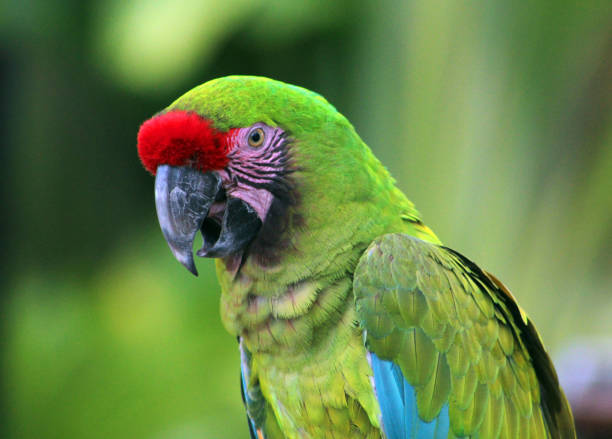
The Military Macaw is a stunning large parrot known for its intelligence, playful behavior, and strong bond with humans. Native to Central and South America, military macaws are admired for their beautiful green feathers, social personalities, and impressive learning abilities. These highly intelligent birds require daily interaction, mental stimulation, and proper care to thrive in captivity. Whether you are considering adopting one or simply want to learn more, this complete military macaw care guide covers everything from temperament and diet to lifespan, training, and ownership costs.
Military macaws are intelligent and social parrots native to Central and South America. Known for their green plumage, playful personality, and strong emotional bonds with owners, these large parrots require daily interaction, a balanced diet, and regular exercise. Military macaws can live for several decades with proper care and are considered excellent companion birds for experienced parrot owners.
| Feature | Military Macaw | Blue and Gold Macaw |
|---|---|---|
| Size | Large | Very Large |
| Noise Level | Moderate | High |
| Talking Ability | Moderate | Good |
| Temperament | Gentle and Loyal | Playful and Energetic |
| Lifespan | 40–60 Years | 50–70 Years |
| Good for Beginners | No | No |
Origin and History
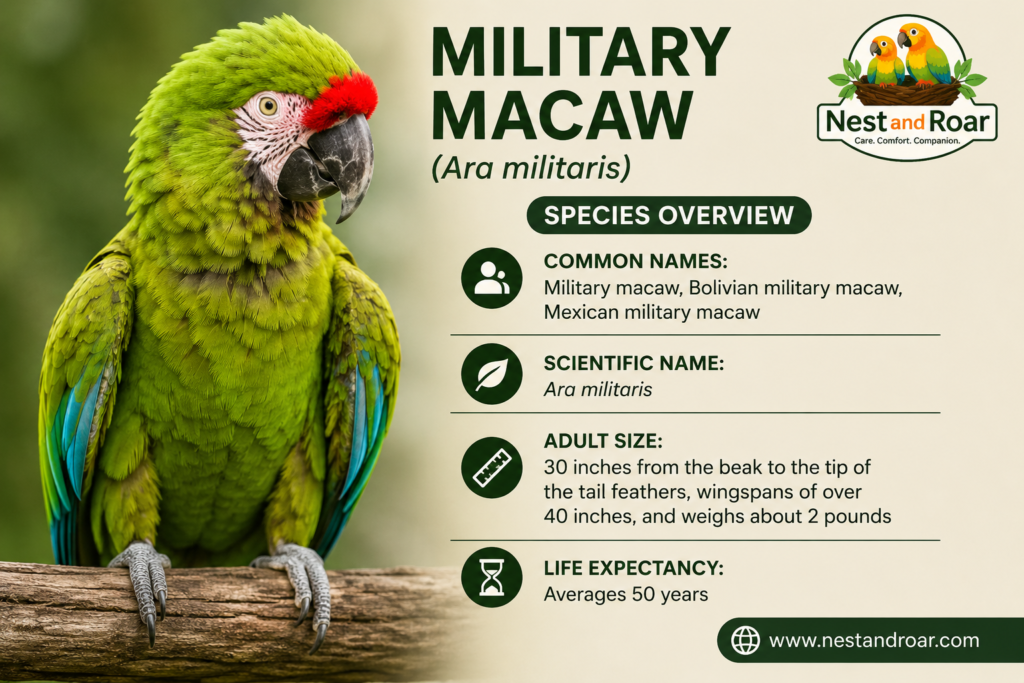
The Military Macaw is a beautiful and intelligent parrot native to Central and South America. Its natural range stretches from Mexico through Bolivia and northern Argentina. Unlike many tropical parrots that prefer dense rainforests, military macaws are commonly found in dry woodlands, arid forests, canyons, foothills, and areas near rivers or water sources. Some South American populations also inhabit humid lowland forests.
There are two recognized subspecies of the military macaw:
- Mexican Military Macaw (Ara militaris mexicana) – the largest subspecies mainly found in Mexico
- Bolivian Military Macaw (Ara militaris boliviana) – commonly found from Bolivia to northern Argentina
The military macaw received its name because of its olive-green feathers, which resemble traditional military uniforms. European explorers first documented these parrots during the 1500s when they arrived in the Americas and brought exotic birds back to Europe.
Today, military macaws are considered a vulnerable species due to habitat destruction, illegal trapping, and the exotic pet trade. Although thousands still exist in the wild, regional populations continue to decline because of deforestation and human activity.
Military macaws are also popular in aviculture and are sometimes used to breed hybrid macaws such as:
- Calico Macaw
- Miligold Macaw
- Milicinth Macaw
Temperament and Personality
Military macaws are intelligent, affectionate, and highly social parrots known for their playful personalities and strong emotional bonds with humans. In the wild, they usually live in pairs or flocks of up to 20 birds, rarely spending time alone.
As pets, military macaws can become extremely loyal companions when properly socialized from a young age. Hand-fed birds often develop deep trust with their owners and may even prefer one specific person. Early socialization with multiple people is important to help them remain friendly and comfortable in different social situations.
These parrots are curious by nature and enjoy interacting with their human “flock.” While military macaws are not always as cuddly as some smaller parrots, they still enjoy affection, attention, and regular interaction with trusted family members.
Because they are emotionally sensitive birds, their mood often reflects their environment and the behavior of their owners. A bored or neglected military macaw may become noisy, nippy, or destructive. However, a well-trained and mentally stimulated bird is usually gentle, entertaining, and friendly.
Military macaws are also excellent watchdog birds. They are highly alert and may loudly vocalize when strangers approach the home or when something unusual occurs.
Related : Top 8 Yellow Parrot Breeds That Will Brighten Your Home
Speech and Vocalization
Macaws are intelligent parrots capable of learning several words and short phrases with consistent training. Although they are not considered the best talking macaw species, many birds can still become fairly talkative over time.
These parrots naturally communicate through loud calls, croaks, and screeches. Like most macaws, they are especially vocal during sunrise and sunset. Because of their noise level, Macaws are generally not ideal pets for apartments or small shared living spaces.
Positive reinforcement, patience, and repetition are the best ways to teach a Macaw to speak. Many owners use treats and praise during training sessions.
Military Macaw Colors and Appearance
Macaws are medium-to-large parrots recognized for their striking green plumage and colorful wing feathers.
Physical Characteristics
- Bright green head and body
- Olive-green feathers across the wings and back
- Blue edging on wing feathers
- Red forehead patch above the beak
- Long tail feathers with blue, red, and brown tones
- Large black curved beak
- Gray legs and feet
- White facial skin with thin black feather lines
Male and female military macaws look nearly identical, making visual gender identification difficult. DNA testing or surgical sexing is usually required to determine the bird’s sex accurately.
Caring for a Military Macaw
Macaws require significant attention, space, and mental stimulation. These parrots are best suited for experienced bird owners who can dedicate time to daily interaction and enrichment.
Because parrots view their owners as flock members, military macaws can become lonely or stressed if ignored for long periods. Without enough stimulation, they may develop behavioral problems such as:
- Feather plucking
- Excessive screaming
- Biting
- Destructive chewing
Cage Requirements
Military macaws need a large, durable cage with plenty of room to stretch their wings comfortably.
Recommended Cage Size
| Requirement | Recommended Size |
|---|---|
| Width | At least 3 feet |
| Height | Around 5 feet |
| Perches | Multiple large perches |
| Play Area | Separate play stand recommended |
Bird-safe toys, ropes, swings, bells, and untreated wood branches are essential because military macaws love chewing and exploring.
Regular cleaning is also important for maintaining good hygiene and preventing disease.
Common Health Problems
Like other large parrots, military macaws can develop several health issues if not properly cared for.
Common Health Problems
| Health Condition | Description |
|---|---|
| Feather Plucking | Often caused by stress or boredom |
| Overgrown Beak | May require veterinary trimming |
| Psittacosis | Bacterial infection common in parrots |
| Macaw Wasting Syndrome | Serious viral disease affecting digestion |
| Obesity | Caused by poor diet and lack of exercise |
Routine veterinary checkups, proper nutrition, and daily exercise are essential for keeping a Macaw healthy.
Military Macaw Diet and Nutrition
In the wild, military macaws eat seeds, nuts, berries, fruits, and vegetation. Pet military macaws require a balanced diet that closely mimics their natural food sources.
Healthy Diet
- High-quality parrot pellets
- Fresh fruits
- Leafy green vegetables
- Nuts in moderation
- Seeds as treats
- Fresh clean water daily
Safe fruits and vegetables include:
- Apples
- Bananas
- Carrots
- Spinach
- Sweet potatoes
- Bell peppers
Toxic Food
Never feed:
- Avocado
- Chocolate
- Caffeine
- Alcohol
- Rhubarb
An adult Macaw typically eats around ½ to ¾ cup of pellets and a similar amount of fresh fruits and vegetables each day.
Exercise and Mental Stimulation
Macaws are highly active birds that require several hours of daily exercise outside their cage.
Experts recommend at least 2 to 4 hours of supervised out-of-cage time every day. This allows the bird to:
- Stretch its wings
- Explore safely
- Exercise muscles
- Reduce boredom
- Improve mental health
Interactive toys and puzzle feeders are excellent ways to keep Macaws mentally stimulated.
Pros and Cons of Owning
Pros
- Intelligent and trainable
- Strong bond with owners
- Beautiful feather colors
- Can learn tricks and words
- Social and entertaining personality
Cons
- Loud vocalizations
- Requires large cage and space
- Needs daily social interaction
- Expensive long-term care
- Can become destructive when bored
Where to Buy or Adopt
Macaws are available through reputable bird breeders, exotic bird rescues, and parrot adoption centers. Prices usually range from $2,000 to $4,000 depending on age, training, and breeder reputation.
Before purchasing a Macaw, always look for signs of a healthy bird:
- Bright, clear eyes
- Clean feathers
- Active behavior
- Healthy appetite
- Alert personality
It is also important to spend time interacting with the bird before bringing it home to ensure it matches your lifestyle and experience level.
Final Thoughts
Macaws are intelligent, loyal, and fascinating parrots that can become lifelong companions for dedicated owners. Their social personalities, playful behavior, and striking appearance make them one of the most admired pet parrot species in the world. However, they require significant commitment, daily interaction, and proper care to thrive in captivity.
For bird lovers willing to invest time, patience, and attention, the military macaw can be an affectionate and rewarding Military Macaw: Complete Guide to Personality, Care, Diet, Lifespan, and Ownership