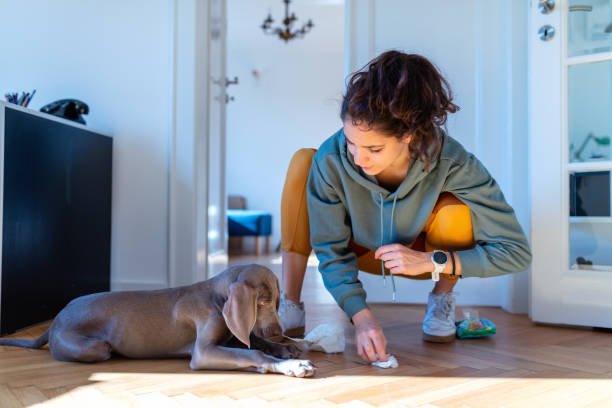
Bringing home a new puppy is exciting—but if you’re constantly cleaning up accidents, you’re probably wondering how to potty train a puppy as quickly as possible.
The good news? Every healthy puppy can learn where and when to go to the bathroom. Potty training isn’t about luck or having an especially smart dog. It’s about creating a consistent routine, rewarding the right behavior, and understanding how puppies learn.
Whether you have a playful Labrador Retriever, a tiny Chihuahua, or an energetic Goldendoodle, this guide walks you through a proven, veterinarian-recommended approach to house-training. You’ll learn how to establish a bathroom schedule, use crate training effectively, avoid common mistakes, solve setbacks, and help your puppy become reliably house-trained.
Quick Answer: Most puppies can be potty trained in 4 to 6 months, while some begin showing reliable bathroom habits within a few weeks when training is consistent and positive.
Table of Contents
- Why Potty Training Matters
- When to Start Potty Training
- How Puppies Learn
- Supplies You’ll Need
- Step-by-Step Potty Training Process
- Puppy Potty Training Schedule
- Crate Training
- Apartment vs. House Training
- Potty Training While You’re at Work
- Common Problems and Solutions
- Breed Differences
- Weather Challenges
- Health Issues That Affect Potty Training
- Signs Your Puppy Is Fully Potty Trained
- Frequently Asked Questions
- Final Thoughts
Why Potty Training Is Important
Potty training is about much more than preventing messes around your home. A structured routine helps your puppy develop confidence, understand household expectations, and build trust with you.
Proper house training also:
- Creates healthy daily habits
- Reduces stress for both puppy and owner
- Prevents unwanted behaviors from becoming permanent
- Builds communication between you and your puppy
- Makes future training much easier
Remember that puppies aren’t being stubborn when they have accidents. They’re still developing bladder control and learning where they’re expected to eliminate.
When Should You Start Potty Training a Puppy?
The best time to begin is the very first day your puppy comes home.
Most puppies are adopted between 8 and 12 weeks of age, making this the ideal window to establish a routine before bad habits develop.
Young puppies simply cannot hold their bladder for long periods.
General Bladder Control Guide
| Puppy Age | Maximum Holding Time |
|---|---|
| 8 weeks | 2 hours |
| 10 weeks | 2–3 hours |
| 12 weeks | 3 hours |
| 4 months | 4 hours |
| 6 months | Up to 6 hours |
Every puppy develops differently, so these are only guidelines.
How Puppies Learn Potty Training
One of the biggest misconceptions is that puppies understand why they’re being punished after an accident.
They don’t.
Dogs learn by association.
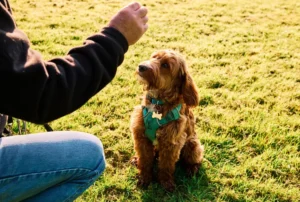
If your puppy receives praise and treats immediately after going outside, they begin associating outdoor elimination with positive outcomes.
Likewise, if they have an accident indoors and are punished afterward, they usually associate the punishment with your presence—not with the accident itself. That’s why modern trainers recommend positive reinforcement over punishment.
Supplies You’ll Need
Having the right tools makes house training much smoother.
You’ll need:
- Properly sized puppy crate
- Comfortable crate bedding
- High-value training treats
- Standard leash
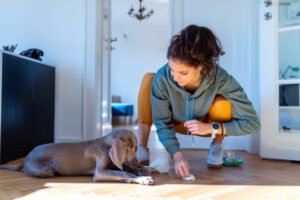
- Enzyme-based pet stain cleaner
- Food and water bowls
- Puppy playpen (optional)
- Potty bells (optional)
- Puppy training pads (only if necessary)
Pro Tip: Enzyme cleaners break down urine proteins that ordinary cleaners leave behind. If your puppy keeps returning to the same indoor spot, lingering odor is often the reason.
Step-by-Step Guide: How to Potty Train a Puppy
Step 1: Create a Consistent Potty Schedule
Dogs thrive on routines.
Take your puppy outside:
- Immediately after waking up
- After every meal
- After drinking large amounts of water
- After naps
- After energetic play sessions
- Before bedtime
- Every 1–2 hours for young puppies
Consistency teaches your puppy when bathroom breaks happen.
Step 2: Choose One Bathroom Spot
Always take your puppy to the same outdoor area.
Dogs rely heavily on scent, and familiar smells encourage them to eliminate more quickly.
Avoid wandering around the yard. Instead, stand quietly and allow your puppy to focus.
Step 3: Introduce a Potty Cue
Choose one simple phrase such as:
- Go potty
- Go pee
- Hurry up
- Do your business
Say it once in a calm voice as your puppy begins eliminating.
After enough repetition, they’ll associate the cue with the action.
Step 4: Reward Immediately
Timing matters.
Within two seconds of your puppy finishing:
- Give enthusiastic praise
- Offer a tasty treat
- Allow a few minutes of play
Immediate rewards help puppies understand exactly which behavior earned the reward.
Step 5: Supervise Constantly Indoors
Until your puppy has gone several weeks without accidents, they shouldn’t have unrestricted access to your home.
Use:
- A leash indoors
- Baby gates
- Exercise pens
- Crate time when unsupervised
The fewer opportunities your puppy has to practice indoor accidents, the faster they’ll learn.
Step 6: Learn Your Puppy’s Signals
Every puppy communicates before they need to go.
Common signs include:
- Sniffing the floor
- Walking in circles
- Suddenly stopping play
- Whining
- Going toward the door
- Squatting
Recognizing these signals early prevents many accidents.
Read Also: 10 Dog Breeds With Curly Tails
Read Also: Can I Train My Puppy Myself Without a Trainer? Expert Guide for New Dog Owners
Sample Puppy Potty Schedule
7:00 AM – Wake up and immediately go outside
7:15 AM – Breakfast
7:30 AM – Potty break
8:00 AM – Playtime
9:00 AM – Outside
10:00 AM – Nap
11:00 AM – Potty break
12:00 PM – Lunch
Continue this routine throughout the day with potty breaks every one to two hours.
Why Crate Training Works
Crate training is one of the most effective potty training methods because dogs naturally avoid soiling the area where they sleep.
Choose a crate that’s:
- Large enough to stand comfortably
- Large enough to turn around
- Not oversized
A crate that’s too large may encourage your puppy to use one end as a bathroom.
Never use the crate as punishment. It should always feel like a safe, relaxing place.
Potty Training in an Apartment vs. a House
Apartment Living
Apartment owners often face longer trips outside.
Helpful strategies include:
- Keep shoes and leash near the door.
- Use elevators immediately when your puppy signals.
- Carry very young puppies outside if necessary.
- Use training pads only as a temporary solution.
House with a Yard
A fenced yard makes training easier because bathroom trips happen more quickly.
Still, always take your puppy to the same spot rather than allowing random elimination throughout the yard.
Potty Training While You’re at Work
Many owners worry about leaving their puppy alone.
If you’ll be away for several hours:
- Arrange for a family member or friend to provide potty breaks.
- Hire a trusted dog walker.
- Consider a pet sitter.
- Use a properly sized playpen if absolutely necessary.
Young puppies shouldn’t remain crated all day because they physically cannot hold their bladder that long.
Why Puppies Sometimes Regress
It’s common for puppies to have setbacks.
Regression may happen because of:
- Changes in routine
- Moving to a new home
- Excitement
- Growth spurts
- Stress
- Illness
If your puppy suddenly starts having accidents again, return to frequent potty breaks and closer supervision for several days.
Common Potty Training Problems
My Puppy Pees Right After Coming Inside
This often means they became distracted outdoors.
Stay outside a few extra minutes after they finish, and reward successful potty trips before returning indoors.
My Puppy Keeps Using the Same Spot Indoors
The smell may still be present.
Use an enzyme-based cleaner and block access to the area until the habit disappears.
My Puppy Won’t Go Outside
Remain patient.
Avoid playing until they’ve finished eliminating.
Once they go, reward generously.
My Puppy Has Frequent Accidents
Review your schedule.
Most accidents happen because puppies simply weren’t taken outside soon enough.
Weather Challenges
Weather affects many puppies.
Cold Weather
Small breeds may hesitate because of freezing temperatures.
Keep trips short and reward generously.
Rain
Many puppies dislike wet grass.
Use a leash, remain calm, and avoid rushing them.
Summer Heat
Take bathroom breaks early in the morning and later in the evening to prevent overheating.
Breed Differences
Different breeds learn at different speeds.
Smaller Breeds
Examples include:
- Chihuahua
- Yorkshire Terrier
- Maltese
These dogs have smaller bladders and may require more frequent trips outside.
Larger Breeds
Examples include:
- Labrador Retriever
- Golden Retriever
- German Shepherd
- Standard Poodle
Many larger breeds develop bladder control sooner, though consistency remains essential.
Health Problems That Can Affect Potty Training
Sometimes accidents aren’t caused by poor training.
Consult your veterinarian if your puppy:
- Suddenly starts having frequent accidents
- Drinks excessive amounts of water
- Cries while urinating
- Has blood in the urine
- Cannot hold urine despite consistent training
Medical conditions such as urinary tract infections, bladder inflammation, parasites, or congenital abnormalities can interfere with house training.
Signs Your Puppy Is Fully Potty Trained
Your puppy is likely house-trained when they:
- Has gone several weeks without accidents
- Signals at the door
- Sleeps through the night
- Eliminates consistently outside
- Responds to your potty cue
Continue rewarding outdoor potty trips occasionally to reinforce the behavior.
Common Mistakes to Avoid
Many owners accidentally slow the process.
Avoid:
- Punishing accidents
- Waiting too long between potty breaks
- Inconsistent feeding schedules
- Giving too much freedom too soon
- Skipping rewards
- Cleaning accidents with ordinary household cleaners
Patience and consistency always produce better results than punishment.
Frequently Asked Questions
How long does it take to potty train a puppy?
Most puppies become reliably house-trained within four to six months, although individual progress varies.
Can an 8-week-old puppy be potty trained?
Yes. Training should begin immediately, but young puppies need frequent bathroom breaks because they have limited bladder control.
Should I wake my puppy at night?
Very young puppies may need one nighttime bathroom trip. Most older puppies gradually sleep through the night.
Is crate training necessary?
Not required, but it significantly speeds up potty training when used correctly.
Are puppy pads a good idea?
Training pads can help in apartments or during bad weather, but transitioning to outdoor potty training as soon as practical helps avoid confusion.
Why does my puppy pee when excited?
Excitement urination is common in young puppies and usually improves as they mature. Keep greetings calm and avoid overstimulating interactions.
How do I stop my puppy from marking indoors?
Ensure they’re fully house-trained, clean marked areas with enzyme cleaners, supervise closely, and consult your veterinarian if marking becomes persistent.
Final Thoughts
Learning how to potty train a puppy takes patience, consistency, and understanding—not punishment.
Every puppy learns at their own pace, and occasional accidents are a normal part of the process. Focus on creating a predictable routine, rewarding success immediately, supervising carefully, and using tools like crate training to encourage good habits.
With time and persistence, your puppy will learn where to go, accidents will become less frequent, and you’ll enjoy the confidence that comes with a reliably house-trained companion.
The effort you invest during these first few months will pay off with years of good habits, a cleaner home, and a stronger bond with your dog.