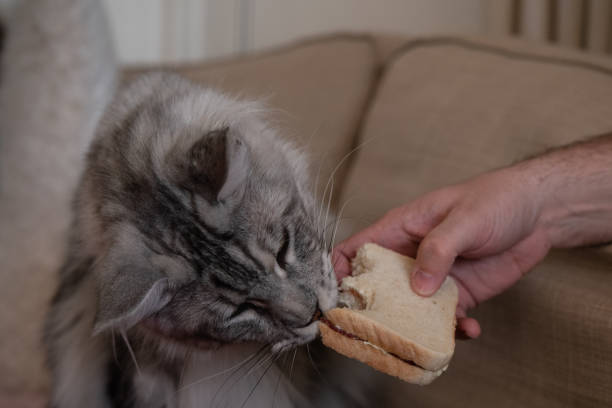
Cats eat bread occasionally without experiencing serious health problems, but that does not mean bread is an ideal food for felines. Cats are obligate carnivores, which means their bodies are designed to get most of their nutrition from animal-based proteins rather than carbohydrates. While a small piece of plain baked bread is usually safe as an occasional treat, it should never replace a balanced cat diet. Some types of bread may also contain ingredients like garlic, onions, raisins, chocolate, or artificial sweeteners that can be harmful or even toxic to cats.
Cats eat bread mainly out of curiosity or because they enjoy the smell and soft texture, especially when the bread is warm and fresh. If you decide to offer bread to your cat, keep the portion very small and choose plain varieties without added sugar or spices. Cat owners should also avoid giving raw bread dough, as yeast dough can expand in a cat’s stomach and cause dangerous health complications. For a healthier alternative, treats like pumpkin, carrots, blueberries, or specially made cat snacks are much better options for supporting your cat’s overall health and nutrition.
Although cats are natural carnivores, they’re often curious about many human foods and may nibble on unexpected items like bread. This can leave pet owners wondering: is bread actually safe for cats to eat? Understanding the possible effects of bread on your cat can help you feel more confident and informed as a responsible pet parent.
To learn more, we spoke with Scott Huggins, who shared expert advice on what cat owners should consider before offering bread or other human foods to their feline companions.
Is Bread Safe for Cats?
Yes, cats eat bread safely in small amounts on occasion, but it should never become a regular part of their diet. While plain bread is generally non-toxic to cats, it offers very little nutritional value for obligate carnivores that thrive on protein-rich foods.
According to veterinarians, an occasional bite of plain white or whole wheat bread is usually harmless as a treat. However, pet owners should be extremely careful about flavored or specialty breads that may contain dangerous ingredients such as raisins, garlic, onions, chocolate, xylitol, or excessive sugar, all of which can be harmful or even toxic to cats.
Basic bread ingredients like flour, water, yeast, and oil are not typically dangerous, but many store-bought breads contain preservatives, seasonings, and additives that are not suitable for feline digestion. Even though cats eat bread sometimes out of curiosity, too much can lead to digestive upset, unnecessary weight gain, or reduced appetite for healthier cat food.
If you decide to let your cat try bread, offer only a tiny piece of plain, fully baked bread as an occasional snack and always monitor for any unusual reactions.
Nutritional Content of Bread
While cats eat bread occasionally without immediate harm, it offers very little nutritional value for them. A typical slice of store-bought white bread contains small amounts of vitamins, minerals, and protein that are generally safe for cats in moderation. However, bread is also packed with sugar, starch, and carbohydrates—ingredients that cats eat only in very limited amounts because they are obligate carnivores and thrive mainly on animal-based protein.
In short, cats eat bread as an occasional treat rather than a healthy dietary staple. Bread should never replace balanced cat food, and too much can contribute to unnecessary weight gain, digestive upset, or poor nutrition over time. Veterinarians recommend that treats, including bread, make up no more than 10% of a cat’s daily diet. Plain bread in tiny portions is usually safe, but flavored breads containing garlic, onions, raisins, chocolate, or artificial sweeteners can be dangerous for cats.
If your cat seems curious about bread, offering a tiny bite once in a while is generally fine, but their primary nutrition should always come from high-quality cat food designed for feline health and energy needs.
Potential Health Risks
While it may seem harmless when cats eat bread in small amounts, too much bread can lead to several health problems. Regular or excessive bread consumption may upset your cat’s digestive system, causing vomiting, diarrhea, or stomach discomfort. Some cats may also develop allergic reactions, including itchy skin or irritation after they eat bread. Since bread is high in carbohydrates and offers little nutritional value for felines, frequent feeding can contribute to unhealthy weight gain, obesity, and even increase the risk of diabetes over time. To keep your pet healthy, bread should only be offered occasionally and in very small portions.
Important Guidelines for Cats Eat Bread Safely
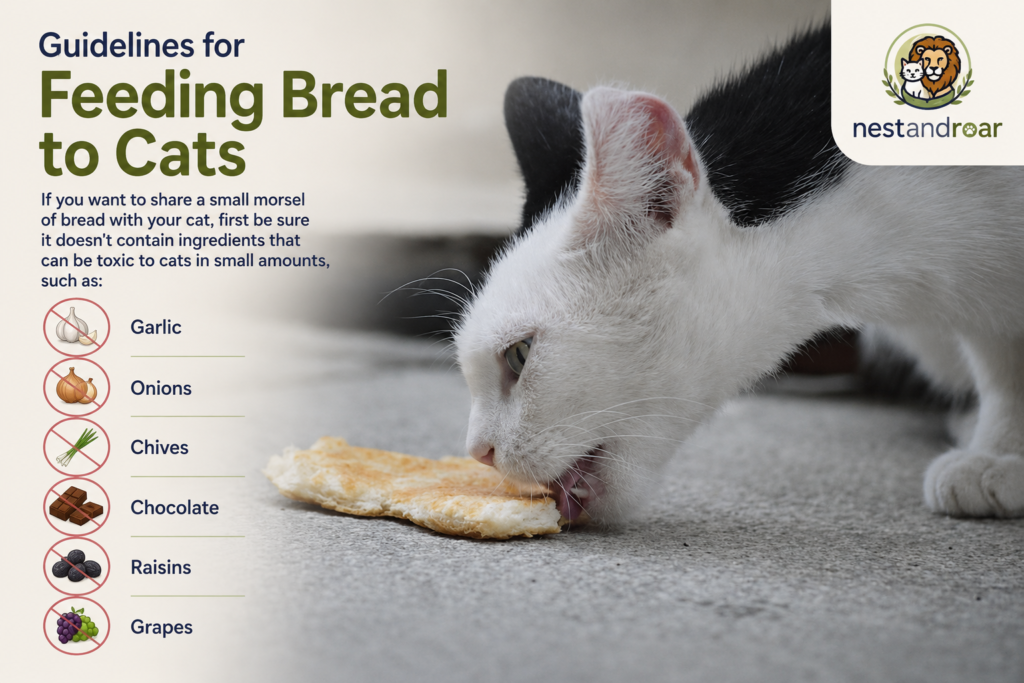
Before letting your cat eat bread, make sure it doesn’t contain ingredients that are harmful to felines, even in small quantities, including
- Garlic
- Onions
- Chives
- Chocolate
- Raisins
- Grapes.
While some cats eat bread because they enjoy its soft texture and aroma, veterinarians note that bread offers little nutritional value for cats. Since cats are obligate carnivores and naturally require very few carbohydrates, bread should only be given occasionally and in tiny amounts to avoid unnecessary empty calories.
Related: Cat Feeding Guide 2026: How Much to Feed Cats (Vet Approved USA Guide)
Other Cat-Safe Foods
While cats eat bread occasionally without harm, bread is not the healthiest or most nutritious treat for felines. Instead of offering bread, pet owners can choose healthier snack options that provide more vitamins, fiber, and overall nutritional benefits.
Safe alternatives include
- blueberries
- apples
- pumpkin
- carrots
Related : Can cats eat fruits: A Complete Guide to Healthy Feline Treats”?
which can support your cat’s digestion and general well-being when served in moderation.
FAQs About Cats Eat Bread
1. Can cats eat bread safely?
Yes, cats can eat plain bread in small amounts occasionally. However, bread does not provide important nutrients for cats and should only be given as an occasional treat.
2. Is bread bad for cats?
Plain baked bread is generally not toxic to cats, but too much bread can lead to weight gain and digestive upset. Bread dough, especially raw yeast dough, can be dangerous for cats.
3. What type of bread can cats eat?
Cats can eat small pieces of plain white or whole wheat bread. Avoid breads that contain garlic, onions, raisins, chocolate, nuts, or excessive sugar, as these ingredients may be harmful.
4. Can kittens eat bread?
Kittens should mainly eat specially formulated kitten food to support healthy growth. Bread is not recommended for kittens because it lacks essential nutrients they need.
5. Why do some cats like eating bread?
Some cats are attracted to the smell and texture of bread, especially warm bread or baked products containing yeast. Every cat has different food preferences and curiosities.
6. What are healthier alternatives to bread for cats?
Healthier snack options for cats include cooked pumpkin, carrots, blueberries, apples without seeds, and high-protein cat treats. These foods can provide more nutritional benefits than bread.