By Anuj || Published on 20/03/26
It’s Important to Know For You as a pet Parent Does Orange is Safe for Your Cat. Because Most of Cats don’t like the smell of citrus. After All, You Never know When Orange Might be an Ingredient in a Food Item .
Now The Question is So we want know That can cats eat oranges? We spoke to three veterinarians to learn if cats can safely eat this sweet, tangy fruit.
Can Cats Eat Oranges?
No, cats should not eat oranges. Jenna Whatley, DVM, Director of Ecosystems at Thrive Pet Healthcare, explains that oranges, like other citrus fruits, contain compounds that can be harmful to cats, including:
- Psoralens: Found in the peel, seeds, flesh, leaves, and stems, these compounds can cause extreme sensitivity to sun, which may result in redness, irritation, or burning if your kitty spends time outside.
- Essential oils, namely limonene and linalool: These are mostly found in the peel and can cause digestive upset and reduced central nervous system response.
- Citric acid: Mostly found in the peel and flesh, this substance can irritate a cat’s gastrointestinal system.
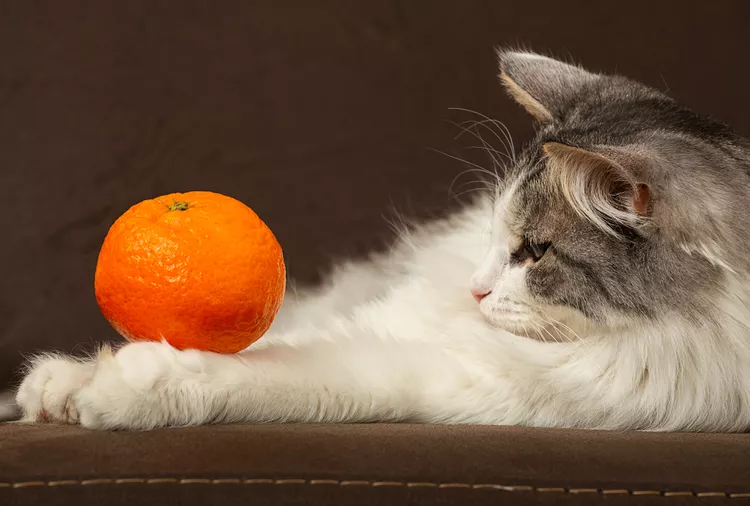
Dr. Eliza O’Callaghan, managing veterinarian at New York’s Small Door Vet, explains that because the orange’s peel and seeds contain more toxic compounds than the fruit itself, they pose the biggest danger to cats.
ALSO Read this 6 Best Cat Breeds for Kids
Fortunately, O’Callaghan notes that cat owners typically don’t need to worry about their pets eating oranges. Because the smell of citrus naturally repels them, it’s highly unlikely a cat would even approach an orange, much less eat enough to be dangerous.
Nutritional Content of Oranges
“Oranges are great for people because they offer fiber for digestion and energy from natural sugars—plus a boost of vitamin C and potassium—but these benefits simply don’t apply to cats..
“According to O’Callaghan, cats don’t need to eat foods with vitamin C because their bodies produce it naturally. Whatley further explains that adding vitamin C through supplements or specific foods can actually cause health issues, like the development of calcium oxalate urinary stones.
“Veterinary expert Dr. Rhiannon Koehler, who writes for The Spruce Pets and works with TeachMe.To, notes that the dietary fiber beneficial to human digestion is largely ineffective for cats. This is because their specialized carnivorous systems aren’t designed to efficiently break down plant-based fibers.”
The natural sugars in oranges offer no nutritional value to cats and are actually unsuitable for them. Whatley notes that excessive sugar intake can lead to dangerous blood sugar spikes, posing a serious risk for cats with pre-existing diabetic conditions.
“As biological meat-eaters, cats require a diet focused on animal protein over plant-based foods like fruit. This means that offering oranges to your cat serves no purpose other than exposing them to unnecessary risks.”
Risks of Feeding Oranges to Cats
According to the doctors O’Callaghan, Koehler, and Whatley, if your cat ingests part of an orange, you might notice the following symptoms:
“According to O’Callaghan, these side effects are generally mild and don’t last long. However, in rare instances, contact with the seeds or peel can lead to more serious issues.”
Should your pet exhibit lingering symptoms or abnormal behavior, please consult your veterinarian right away or head to the nearest emergency clinic.
Safe Alternatives to Oranges for Cats
Even though cats should avoid oranges, other fruits can be served as the occasional snack. These treats must be kept to small portions, however, since fruit isn’t a dietary requirement and too much can cause health issues. To keep your cat’s nutrition balanced, ensure that all treats—fruit included—account for no more than 10% of their total daily calories.
Before giving your cat fruit, be sure to remove seeds, pits, and peels, as these can pose choking hazards or contain substances that may harm your cat.
Cat-safe fruits include:
- Strawberries
- Apples
- Cantaloupe
- Bananas
- Watermelon
- Blueberries
- Apples
- Cranberries
- Blackberries
- Mango
- Raspberry
The Bottom Line on Cats and Oranges
Oranges, while nutritious for humans, are not safe for cats due to their toxic compounds and unsuitability for a feline diet. As obligate carnivores, cats require a diet based on animal-based proteins, with no need for fruits like oranges.
FAQ
- Can cats eat any part of an orange, like the peel or seeds? No, all parts of an orange—including the peel, seeds, flesh, and other plant materials—are harmful to cats. However, the peel and seeds contain the highest concentration of toxic compounds.
- How much orange would a cat need to eat to cause problems? If your cat takes a couple bites of orange flesh, Dr. Koehler says they’re unlikely to show symptoms. However, consuming a larger quantity of the peel or seeds could be more concerning.
- What should I do if my cat eats orange? If your cat ingests any part of an orange, monitor them closely for symptoms like vomiting, diarrhea, drooling, or lethargy. If symptoms appear, contact your vet immediately. You can also contact the Pet Poison Helpline (855-784-7661) or ASPCA Animal Poison Control Center (888-426-4435), which are available 24/7.