The Smartest Birds in the world belong primarily to the corvid and parrot families, exhibiting cognitive abilities that rival primates and even human children. These avian intellectuals possess a remarkably high neuron density in their forebrains—the area responsible for higher thinking—allowing them to pack more processing power into a smaller space than many mammals
Researchers have extensively investigated animal cognition for decades, consistently discovering that avian species occupy some of the highest tiers of biological intelligence. Within this group, specific pet parrots—such as the African Grey and various Macaws—frequently outperform other birds, demonstrating advanced problem-solving skills, emotional depth, and a sophisticated capacity for mimicry that rivals the cognitive abilities of young children.
Parrots are frequently highlighted in scientific research as some of the most cognitively advanced animals on Earth, with intelligence levels that often rival primates and even young children. While many birds show impressive survival instincts, certain pet species—most notably the African Grey and various Macaws—stand out for their ability to go beyond simple mimicry to engage in complex problem-solving, symbolic communication, and social reasoning .
1. African Grey Parrot
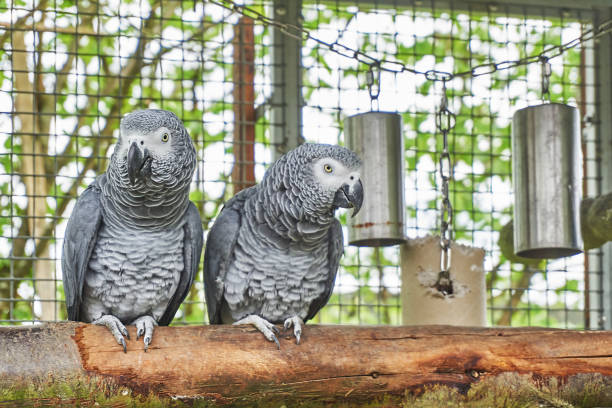
African Grey parrots are the most extensively researched avian species, consistently earning their title as one of the smartest birds in existence. Much of this reputation is thanks to Alex, a famous African Grey who transformed the scientific community’s understanding of bird cognition. Purchased as a one-year-old by Dr. Irene Pepperberg, Alex was the subject of a lifelong study that shattered previous disappointments in avian research—which had primarily focused on less cognitively flexible species like pigeons.
By the time he passed away in 2007, Alex had demonstrated intelligence comparable to a five-year-old human. He didn’t just mimic speech; he understood over 100 words, could identify colors and shapes, and even grasped the concept of “none” or zero. While some skeptics suggest his responses were the result of operant conditioning, his ability to categorize objects and express needs far exceeded that of almost any other animal ever studied. Today, African Greys are celebrated as some of the smartest birds on the planet, though their high IQ means they require an immense amount of mental stimulation and social engagement to thrive
2. Macaws
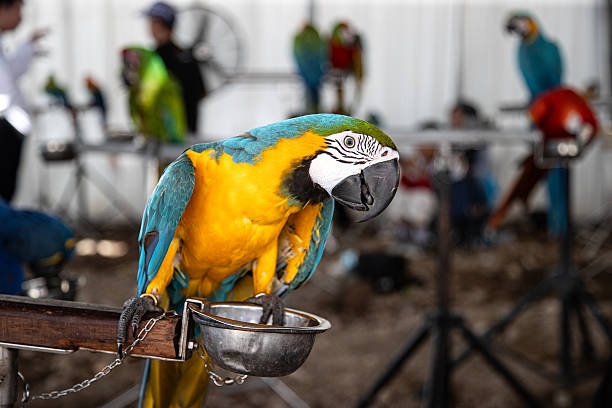
Often ranked among the smartest birds alongside the famous African Grey, macaws—such as the record-breaking Hyacinth—possess a cognitive depth that spans the entire parrot family. While these birds are celebrated for their physical beauty, their mental prowess is what truly sets them apart as some of the most intelligent creatures in the avian world.
The cognitive abilities of certain macaws are frequently compared to those of a 2- to 3-year-old human child. These smartest birds are capable of sophisticated problem-solving, intentional tool use, and intricate social communication. Beyond vocalizations, they exhibit emotional complexity through physical reactions, such as blushing their facial skin during high-arousal social interactions. To further illustrate their intelligence, research has shown that parrots can understand the concept of “zero,” a mathematical milestone only reached by a few animal species.
This high level of intelligence is backed by unique neurobiology. A landmark 2018 Canadian study analyzed 98 bird species and identified a specific brain structure—the spiriform nucleus—that is significantly enlarged in parrots. Similar to the neural pathways found in primates, this region acts as a high-speed communication hub between the cortex and cerebellum.
In these smartest birds, the spiriform nucleus is two to five times larger than that of a chicken, providing the neurological foundation for planning and executing the advanced, multi-step behaviors that define their brilliance.
3.Cockatoos
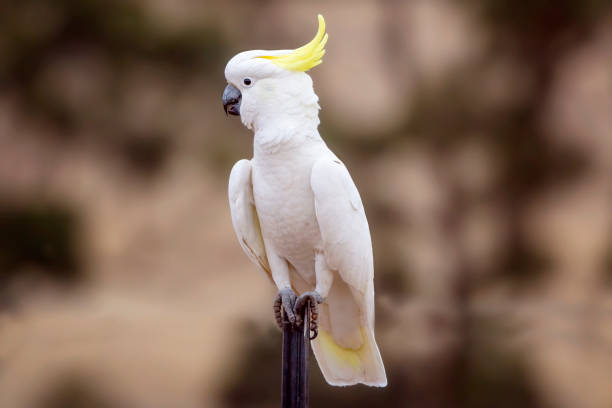
Consistently ranked among the smartest birds on Earth, cockatoos have revolutionized our understanding of avian intelligence through their unique use of tools. They are the only birds known to manufacture their own musical instruments; for instance, the wild palm cockatoo in Australia crafts drumsticks from twigs and seed pods to perform rhythmic displays. This ability to keep a beat suggests that these smartest birds possess a rare neurological connection between their auditory and motor systems, a trait once thought to be exclusively human.
Their cognitive depth is further proven by their grasp of “object permanence”—the realization that an object still exists even when it is hidden from view. A 2014 study on Goffin cockatoos revealed that these small parrots can track hidden rewards with ease, a developmental milestone that human infants typically don’t reach until they are 18 to 24 months old. This puts their spatial reasoning and working memory on par with both primates and toddlers.
Adding to their reputation as the smartest birds, Goffin cockatoos have also been observed “innovating” in the wild, such as using three different types of tools in a specific sequence to reach food—a behavior known as tool-set use. They don’t just mimic behavior; they can actually learn to pick locks and solve complex, multi-step puzzles through logical deduction rather than just trial and error.
Related : Unlock the Powerful Song of Your Happy Zebra Finch
4. Budgerigars
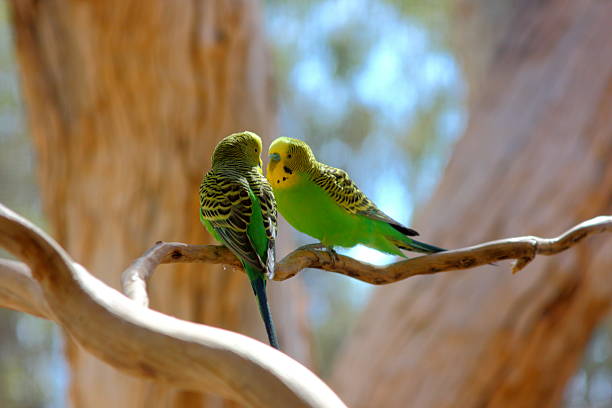
Often called budgies or common parakeets, budgerigars prove that being one of the smallest members of the parrot family doesn’t limit their status among the smartest birds. While they are only slightly larger than the parrotlet, their cognitive abilities far outweigh their tiny size.
These smartest birds made history as the first non-mammals to demonstrate a fundamental grasp of human language structures, showing cognitive skills comparable to a seven-month-old human infant. Research has highlighted their ability to identify and memorize abstract patterns within strings of meaningless words—a sophisticated mental feat previously only observed in humans, monkeys, and rats.
Beyond pattern recognition, budgies are world-class mimics; some individuals have developed vocabularies of over 1,700 words, showing an incredible capacity for auditory memory. Additionally, recent studies suggest they possess “prosocial” tendencies, meaning they can make choices that benefit their peers without any immediate reward for themselves, a hallmark of high-level social intelligence.
5. Conures
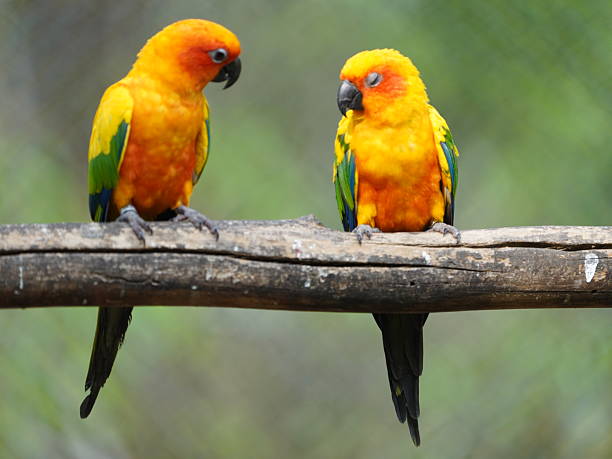
Just like their relatives in the parrot family, conures—including the Green-cheeked, Jenday, and Sun varieties—solidify their reputation as some of the smartest birds through their intense need for mental engagement. Because they possess such high cognitive functioning, these birds require constant environmental enrichment, a variety of interactive toys, and consistent social interaction to keep their active minds healthy.
The intelligence of these smartest birds is particularly evident in their ability to learn complex tricks and adapt to social hierarchies within a household. Beyond just play, conures are known for their “emotional intelligence,” often mirroring the moods of their owners and using specific calls to communicate distinct needs.
To prevent boredom-induced behaviors, owners must provide foraging puzzles that mimic their natural wild instincts, as a conure’s problem-solving skills are remarkably sharp. Recent observations even suggest that conures can learn to use basic touchscreens or color-coded buttons to request specific treats or activities, further proving their mental agility.
Frequently Asked Questions
- Which bird is considered the smartest Birds overall?
Most researchers rank the African Grey Parrot at the top due to its advanced verbal reasoning, and the New Caledonian Crow as a leader in tool-making and problem-solving. - How do scientists measure bird intelligence?
Intelligence is typically assessed through tests of problem-solving (solving puzzles for food), tool use, memory (finding hidden caches), and self-awareness via the mirror test. - Can any birds recognize themselves in a mirror?
Yes. The Eurasian Magpie is one of the few non-mammals to pass the mirror test, proving it understands that the reflection is itself and not another bird. - Are crows really as smart as primates?
Studies suggest that certain corvids possess planning skills and causal reasoning equivalent to great apes and 4-year-old children. For example, they can solve multi-step puzzles that require several sequential tools. - Do smart birds have a sense of rhythm?
Yes, several species have demonstrated beat induction. For instance, Cockatoos have been observed swaying to a musical beat and even manufacturing their own “drumsticks” to create rhythmic sounds. - Which birds have the best memory?
The Clark’s Nutcracker is a memory champion, capable of storing up to 30,000 seeds in thousands of different locations and recalling them months later, even under snow.