If you enjoy watching birds from your window, porch, or backyard, you may be surprised by how many different species can visit your yard. From colorful Northern Cardinals to noisy Blue Jays and tiny House Sparrows, common backyard birds in USA include an amazing variety of species.
Learning backyard bird identification becomes much easier when you know what to look for. The bird’s size, colors, beak shape, tail, behavior, habitat, and feeding habits can all provide useful clues.
In this guide, we’ll explore 25 common backyard birds in the USA, including how to identify them, what they eat, where they live, and how you can make your yard more attractive to birds.
What Are the Most Common Backyard Birds in the USA?
The species you see will depend on your state, climate, habitat, and season. However, several birds are widespread across the country and are frequently seen around homes, gardens, parks, and bird feeders.
Some of the common backyard birds in USA include:
- Northern Cardinal
- American Robin
- Blue Jay
- Mourning Dove
- House Sparrow
- American Goldfinch
- House Finch
- Black-capped Chickadee
- Tufted Titmouse
- Downy Woodpecker
- Red-bellied Woodpecker
- European Starling
- American Crow
- Carolina Wren
- Song Sparrow
- Dark-eyed Junco
- White-breasted Nuthatch
- Northern Mockingbird
- Brown Thrasher
- Cedar Waxwing
- Common Grackle
- Eastern Bluebird
- Chipping Sparrow
- Gray Catbird
- Barn Swallow
Let’s take a closer look at these fascinating birds.
1. Northern Cardinal
The Northern Cardinal is one of the most recognizable common backyard birds in the United States.
Male cardinals are bright red with a black mask around the face, while females are mostly brown with reddish highlights. Both sexes have a distinctive crest and orange-red bill.
Cardinals frequently visit bird feeders and are especially attracted to sunflower seeds.
Identification:
- Male: bright red
- Female: brown with red accents
- Prominent crest
- Orange-red bill
- Long tail
Food: Seeds, berries, insects, and fruits.
Where you’ll find them: Woodlands, gardens, suburban neighborhoods, and backyards.
2. American Robin
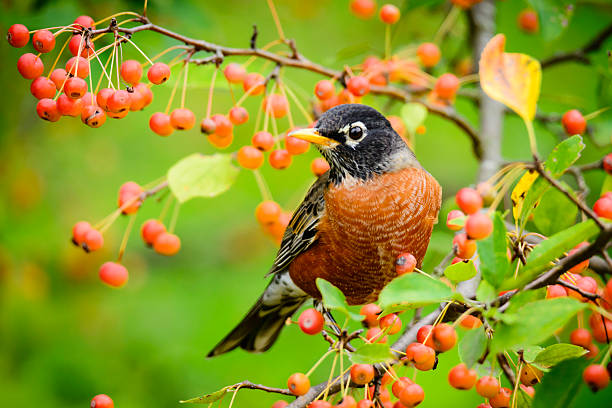
The American Robin is another familiar bird across much of the USA.
It has a grayish-brown back, dark head, and distinctive orange-red breast. Robins are often seen hopping across lawns searching for earthworms and insects.
Although many people think of robins primarily as feeder birds, they often find food naturally in lawns and gardens.
Food: Earthworms, insects, berries, and fruits.
Identification clue: Look for the orange-red breast and relatively large body.
3. Blue Jay
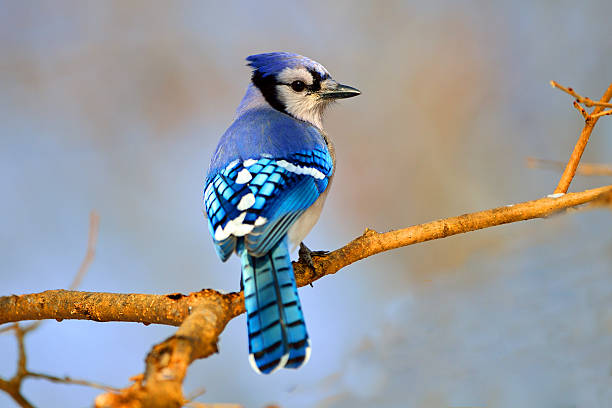
The Blue Jay is famous for its brilliant blue feathers, black markings, and loud calls.
Blue Jays are intelligent and adaptable birds that commonly visit suburban yards and bird feeders.
They particularly enjoy peanuts, sunflower seeds, and other large food items.
Identification:
- Blue upperparts
- White chest
- Black markings
- Large crest
- Strong black bill
Blue Jays can also be quite vocal, making them easy to notice even before you see them.
Also Read : Military Macaw: Bird Species Profile
4. Mourning Dove
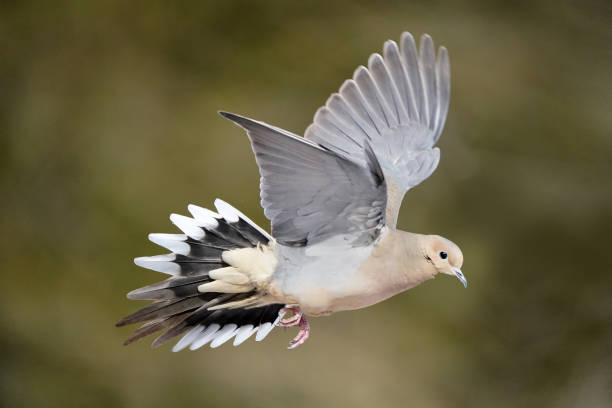
Mourning Doves are among the most widespread backyard birds in America.
They have soft gray and brown plumage, small black spots on their wings, and a long pointed tail.
Their gentle cooing call is one of the most recognizable sounds in suburban neighborhoods.
Mourning Doves commonly feed on the ground beneath bird feeders.
Food: Seeds and grains.
Best identification clue: Long pointed tail and soft gray-brown body.
5. House Sparrow
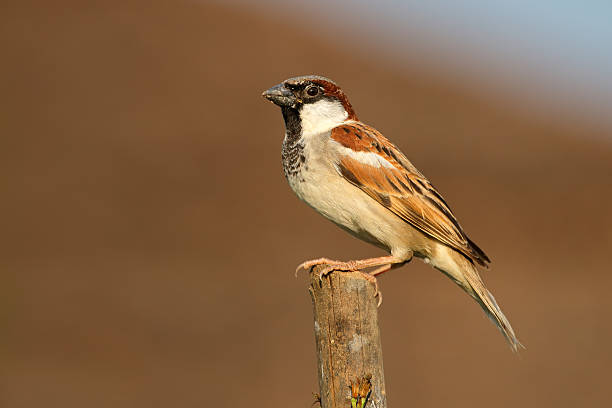
House Sparrows are small birds that have adapted extremely well to living around people.
Males have gray crowns, black bibs, and brown backs. Females are more subdued brown and gray.
They are frequently found around homes, buildings, shopping areas, farms, and gardens.
Food: Seeds, grains, insects, and scraps.
House Sparrows often nest in cavities around buildings.
6. American Goldfinch
The American Goldfinch is one of the brightest small birds you may encounter in your backyard.
Breeding males have brilliant yellow plumage with a black forehead and black wings. Females and winter birds are considerably duller.
Goldfinches love seeds and are frequent visitors to tube feeders.
Food: Primarily seeds, especially sunflower and nyjer seeds.
Habitat: Open woodland, fields, gardens, and suburban areas.
7. House Finch

House Finches are common around bird feeders and residential neighborhoods.
Adult males typically have red coloration around the head and upper breast, while females are mostly brown with streaked underparts.
Their conical bills are designed for eating seeds.
Food: Seeds, fruits, and some plant material.
If you see a small brown finch with a reddish head feeding at a backyard feeder, a House Finch is a good possibility.
8. Black-capped Chickadee

The Black-capped Chickadee is a small, energetic bird with a distinctive black cap and bib.
Its white cheeks make the dark head especially easy to recognize.
Chickadees are curious and may approach feeders while people are nearby.
Food: Seeds, insects, berries, and other small foods.
They are particularly common in northern parts of the United States.
9. Tufted Titmouse
The Tufted Titmouse is another popular feeder bird.
It has a gray body, pale underside, black eyes, and a pointed crest.
Tufted Titmice often appear in mixed flocks with chickadees and other small woodland birds.
Food: Seeds, nuts, berries, and insects.
Identification clue: Gray crest and compact body.
10. Downy Woodpecker
The Downy Woodpecker is one of the smallest and most common woodpeckers found in American backyards.
It has black-and-white plumage and a short bill.
Males have a red patch on the back of the head.
You may notice these birds climbing tree trunks or visiting suet feeders.
Food: Insects, seeds, berries, and suet.
11. Red-bellied Woodpecker
Despite its name, the red coloration on this bird’s belly can be difficult to see.
Its most obvious feature is the red crown and nape, particularly on males.
Red-bellied Woodpeckers are increasingly familiar backyard birds in many parts of the eastern United States.
Food: Insects, nuts, fruits, and seeds.
Look for their black-and-white barred back and red head.
12. European Starling
European Starlings are widespread birds commonly seen around cities, suburbs, farms, and open areas.
Their plumage can look black from a distance but often shows glossy purple, green, and blue colors when viewed closely.
During certain seasons, white spots become more noticeable.
Food: Insects, fruits, seeds, and grains.
Starlings often travel in large groups.
13. American Crow

The American Crow is a large, entirely black bird with a strong bill and broad wings.
Crows are highly intelligent and adaptable.
They can live in forests, farms, cities, suburbs, and almost any environment where food is available.
Food: Insects, seeds, fruits, carrion, and human-associated food.
Their loud caw is usually enough to identify them before they come into view.
14. Carolina Wren

The Carolina Wren is a small but remarkably loud backyard bird.
It has warm reddish-brown upperparts, a pale underside, and a prominent white eyebrow stripe.
Despite its small size, its song can be surprisingly powerful.
Food: Insects, spiders, seeds, and berries.
Carolina Wrens are especially common in the southeastern United States.
15. Song Sparrow

Song Sparrows are adaptable birds found across many parts of North America.
They usually have brown, streaked plumage with a noticeable pattern on the chest.
Their appearance can vary considerably depending on geographic region.
Food: Seeds, insects, and plant material.
Their varied song is one of their most recognizable characteristics.
16. Dark-eyed Junco

Dark-eyed Juncos are small sparrows commonly seen around feeders, particularly during winter in many parts of the country.
A common form has a dark gray head and upper body with a pale belly and pinkish bill.
Their coloration varies significantly across North America.
Food: Seeds and insects.
Juncos often feed on the ground beneath bird feeders.
17. White-breasted Nuthatch

The White-breasted Nuthatch is easy to recognize because of its unusual habit of moving headfirst down tree trunks.
It has a white face and chest, blue-gray back, and black stripe across the top of the head.
They frequently visit suet and seed feeders.
Food: Insects, nuts, and seeds.
18. Northern Mockingbird

Northern Mockingbirds are famous for their ability to imitate other birds and environmental sounds.
They are gray and white, with white wing patches that become especially noticeable during flight.
Mockingbirds commonly live around suburban areas, parks, gardens, and open woodland.
Food: Insects, berries, and fruits.
19. Brown Thrasher

The Brown Thrasher is a relatively large songbird with reddish-brown upperparts and a heavily streaked breast.
It often spends time searching through leaf litter for insects.
Its long tail and streaked appearance make identification easier.
Food: Insects, berries, fruits, and seeds.
20. Cedar Waxwing

Cedar Waxwings have a smooth, elegant appearance.
They are mostly brown, gray, and yellow, with a black facial mask and yellow-tipped tail.
These birds often travel in groups and are particularly fond of berries.
Food: Mostly fruits and berries, along with insects during some seasons.
21. Common Grackle
Common Grackles are larger than many typical backyard songbirds.
Their dark bodies can show iridescent blue, purple, or green colors in sunlight.
They often gather in groups around lawns, fields, parks, and residential areas.
Food: Seeds, insects, grains, fruits, and other foods.
22. Eastern Bluebird

The Eastern Bluebird is a beautiful small thrush with bright blue coloration in males and warm reddish-orange breasts.
Females are less intensely colored but still show blue and orange tones.
Bluebirds are often associated with open woodland, fields, farms, and suburban areas.
Food: Insects, berries, and fruits.
Providing suitable nest boxes can help attract bluebirds where appropriate.
23. Chipping Sparrow

Chipping Sparrows are small, slender birds with a distinctive reddish cap during the breeding season.
They often forage on the ground in open areas, gardens, parks, and yards.
Food: Seeds and insects.
24. Gray Catbird

Gray Catbirds are medium-sized songbirds with gray bodies, black caps, and rusty-colored feathers underneath the tail.
They are known for their varied calls and ability to imitate sounds.
They commonly live around dense shrubs, gardens, and woodland edges.
Food: Berries, fruits, and insects.
25. Barn Swallow
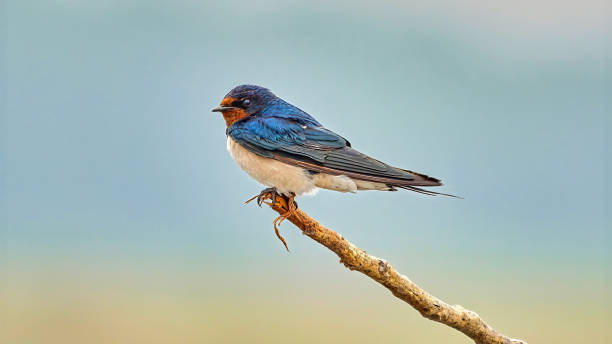
Barn Swallows are graceful flying birds with long pointed wings and deeply forked tails.
They are often seen flying rapidly over fields, ponds, farms, and open areas while catching insects in the air.
Food: Flying insects.
Their long tail and agile flight make them relatively easy to recognize.
How to Identify Common Backyard Birds
If you’re new to bird watching, you don’t need to memorize every species. Start with a few basic characteristics.
1. Look at the Size
Compare the bird with familiar birds.
Is it sparrow-sized, robin-sized, crow-sized, or larger?
2. Check the Colors
Look for major colors on the head, breast, wings, and tail.
Don’t rely on one small patch of color.
3. Study the Beak
The shape of the bill can tell you a lot about what a bird eats.
Seed-eating birds often have short, thick bills, while insect-eating or nectar-feeding species may have more specialized bills.
4. Watch the Behavior
Does the bird:
- Feed on the ground?
- Climb tree trunks?
- Hang upside down?
- Hover around flowers?
- Search through leaves?
- Visit a bird feeder?
Behavior can be an excellent identification clue.
5. Consider the Season
Some birds migrate, while others remain in the same area throughout the year.
Your list of common backyard birds in USA can therefore change considerably between summer and winter.
How to Attract Backyard Birds
If you want to see more common backyard birds, make your yard safer and more useful for them.
Provide Bird Feeders
Different feeders attract different species.
Tube feeders can attract finches and chickadees, while platform feeders may attract larger birds and ground-feeding species.
Offer Appropriate Food
Sunflower seeds are popular with many backyard birds.
Other foods, such as nyjer seed, peanuts, suet, or fruit, can attract different species.
Avoid feeding birds spoiled or moldy food.
Add Native Plants
Native trees, shrubs, flowers, and grasses can provide natural food and shelter.
Plants that produce berries, seeds, nectar, or insects can make your yard more attractive to birds.
Provide Water
A clean birdbath can provide birds with drinking and bathing opportunities.
Change the water regularly and keep the birdbath clean.
Create Shelter
Dense shrubs and native vegetation give birds places to hide from predators and rest between feeding trips.
Frequently Asked Questions
What are the most common backyard birds in the USA?
Some of the most familiar species include Northern Cardinals, American Robins, Blue Jays, Mourning Doves, House Sparrows, American Goldfinches, House Finches, chickadees, titmice, woodpeckers, and sparrows.
What is the most common backyard bird?
There isn’t one single species that is equally common in every part of the United States. Bird populations vary by region, habitat, season, and food availability.
What birds are commonly found at bird feeders?
Common feeder visitors include Northern Cardinals, House Finches, American Goldfinches, chickadees, Tufted Titmice, nuthatches, Mourning Doves, and Blue Jays.
What is the easiest backyard bird to identify?
Northern Cardinals are among the easiest because males have distinctive bright red plumage and an orange-red bill.
How can I identify a backyard bird?
Look at its size, colors, bill shape, tail, behavior, habitat, and location. Taking a clear photograph can also make identification easier.
What should I put in my backyard bird feeder?
Black-oil sunflower seeds are a popular choice for attracting a variety of seed-eating birds. Different bird species may prefer different foods, so offering more than one type can increase variety.
Final Thoughts
Watching birds doesn’t require traveling to a national park or wildlife reserve. Your own backyard can become an excellent place to discover nature.
The common backyard birds in USA range from colorful Northern Cardinals and Eastern Bluebirds to clever American Crows, energetic chickadees, beautiful goldfinches, and impressive woodpeckers.
Once you learn the basic features of each species, backyard bird identification becomes much easier. Keep a notebook or take photographs of the birds you see, pay attention to seasonal changes, and gradually build your own list of backyard visitors.
Most importantly, enjoy the process. Bird watching is less about identifying every bird perfectly and more about noticing the fascinating wildlife that is already around you.