Finding a tiny baby bird on the ground can be a stressful moment. You may immediately wonder, what to feed a baby bird and whether you should take it inside.
The good news is that a baby bird on the ground is not necessarily abandoned.
In fact, many young birds spend time outside the nest while their parents continue to feed and protect them. The most helpful thing you can do is first figure out whether the bird is a nestling or a fledgling.
This simple distinction can help you avoid accidentally separating a healthy baby bird from its parents.
Should You Feed a Baby Bird You Found?
Usually, no.
Wild baby birds have very specific nutritional needs, and the right food depends on the species and its stage of development. Giving a baby bird the wrong food—or trying to force food or water into its mouth—can cause serious problems.
The U.S. Fish & Wildlife Service recommends contacting a professional when a wild animal genuinely needs help. It also explains that most baby birds found outside do not actually need human intervention.
So before searching your kitchen for something to feed the bird, stop and observe.
The parents may be much closer than you think.
First, Figure Out What Kind of Baby Bird You Found
There are two main stages you should know about: nestlings and fledglings.
What Is a Nestling?
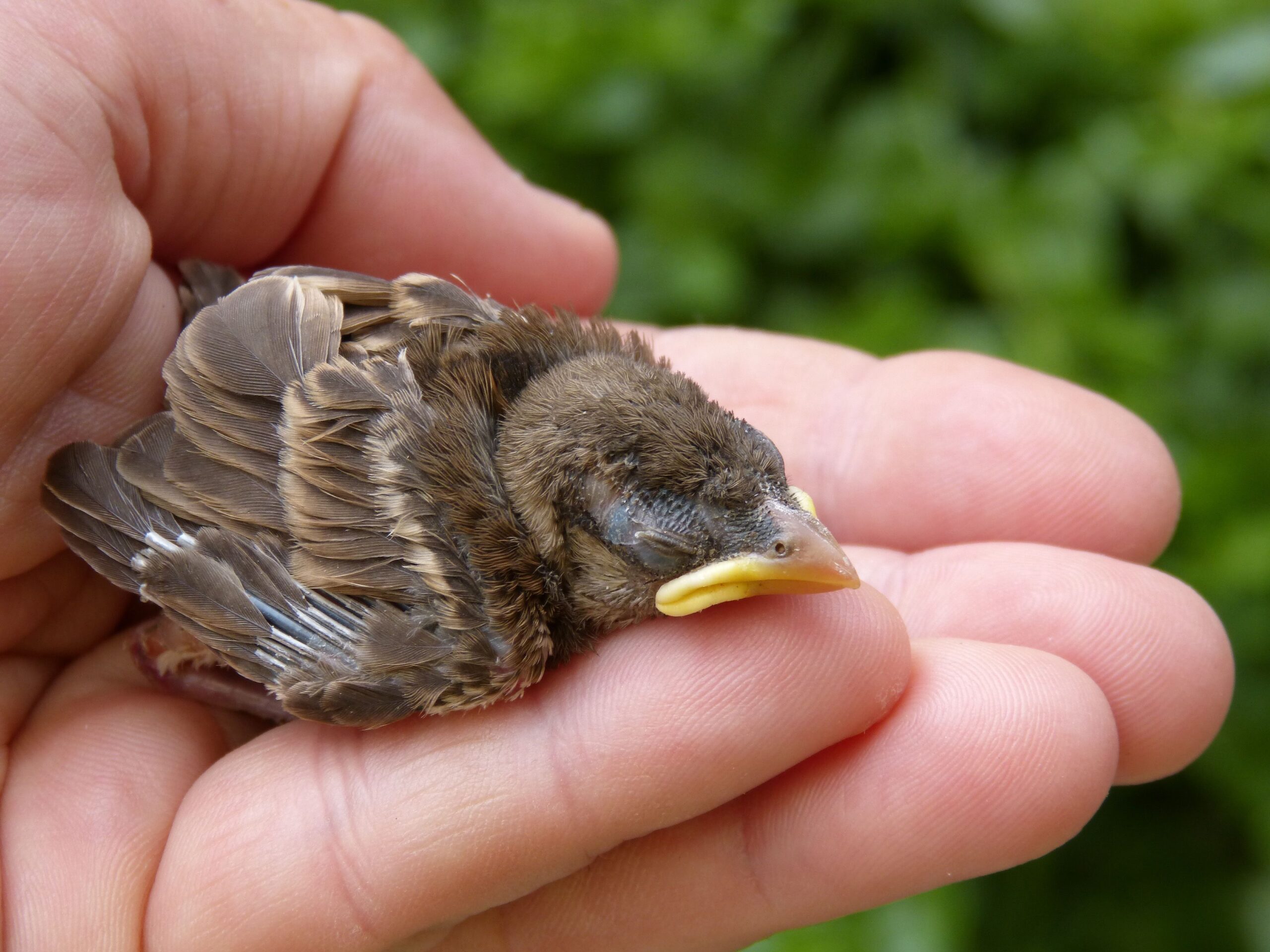
A nestling is a very young bird that is not ready to be outside the nest.
It may have:
- Little or no feathers
- Closed or recently opened eyes
- Limited ability to move
- Difficulty standing or hopping
- A soft, helpless appearance
If you find an uninjured nestling on the ground, look around for its nest.
If you can safely reach the nest, gently place the baby bird back inside.
Don’t worry about the old myth that touching a baby bird will cause its parents to abandon it. The U.S. Fish & Wildlife Service says your scent will not prevent the parents from caring for the bird.
What Is a Fledgling?
A fledgling is an older baby bird that has left the nest but may not be an excellent flyer yet.
It usually has:
- Most or all of its feathers
- The ability to hop
- The ability to grip branches
- Short or awkward flights
- An alert and active appearance
A fledgling sitting on the ground may look helpless to us, but this is often a normal part of growing up.
The parents may be nearby, watching from a tree or feeding the young bird when people aren’t around.
The best thing you can usually do is give the fledgling plenty of space and keep cats, dogs, and children away.
Also Read : Common Backyard Birds in USA: Identification Guide for 25 Popular Species
Also Read : Bird With Orange Beak: 15 Birds You Might See in the USA
Also Read : Top 8 Yellow Parrot Breeds That Will Brighten Your Home
What Do Baby Birds Eat?
So, what do baby birds eat?
There isn’t one universal baby bird diet.
Different species eat different foods, and young birds can have different nutritional requirements from adult birds.
Depending on the species, wild baby birds may receive foods such as insects, larvae, worms, seeds, fruit, or other appropriate foods from their parents.
Many young songbirds, for example, receive protein-rich foods from their parents while they are growing.
This is why simply giving a baby bird bread, milk, seeds, or other household foods isn’t a safe solution.
What to Feed a Baby Bird Found on the Ground
If you found a baby bird outside and it appears healthy, don’t automatically feed it.
Instead, follow these steps.
Step 1: Stay Calm
Your first reaction may be to pick up the bird and bring it inside.
Try not to do that unless the bird is actually in danger.
Take a moment to observe the area.
Step 2: Look at the Bird
Check whether it is featherless or mostly feathered.
If it has very few feathers and appears too young to be outside, it may be a nestling.
If it has feathers and can hop or flutter, it is probably a fledgling.
Step 3: Search for the Nest
If you have found a nestling, carefully look for the nest nearby.
Trees, shrubs, gutters, ledges, and other nearby structures may hide the nest.
If you locate it and can safely reach it, return the nestling to the nest.
Step 4: Give the Parents Space
Once the baby is back in the nest—or if you have found a fledgling—move away.
Adult birds may avoid approaching while people are standing nearby.
Watch from a distance instead.
The U.S. Fish & Wildlife Service notes that parents often return to care for young birds, and people should give them plenty of space.
What NOT to Feed a Baby Bird
One of the biggest mistakes people make is trying to feed a baby bird with whatever food happens to be available at home.
Avoid experimenting with foods such as:
- Bread
- Milk
- Crackers
- Rice
- Human baby food
- Random seeds
- Pet food
- Water by mouth
- Food forced into the bird’s beak
The problem isn’t simply that one particular food is “bad.”
The bigger issue is that you don’t know the bird’s species, age, health condition, or nutritional requirements.
Improper feeding can be dangerous, and wildlife agencies specifically advise against trying to raise wild baby birds yourself.
Don’t Give Water Directly Into a Baby Bird’s Mouth
This is especially important.
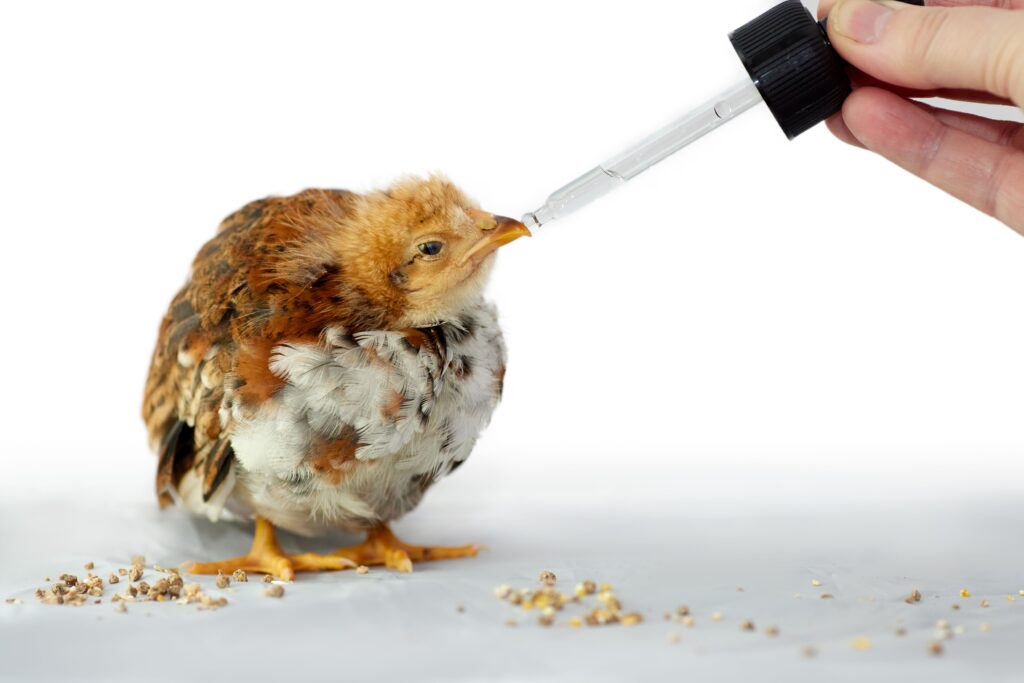
You may think a tiny bird must be thirsty and try to give it water with a dropper or syringe.
Don’t do this unless a qualified wildlife professional specifically tells you how.
Young birds can be extremely delicate, and improperly giving liquids can cause them to inhale the liquid instead of swallowing it.
If the bird needs professional care, let a trained wildlife rehabilitator provide appropriate hydration and nutrition.
What If the Baby Bird Looks Hungry?
A baby bird opening its mouth or making begging sounds doesn’t necessarily mean you should feed it.
Begging is normal baby-bird behavior.
The bird may be signaling to its parents that it wants food.
If you see adult birds coming and going, that’s a very good reason to leave the young bird where it is.
Your job is usually to stay back and allow the parents to do what they naturally do best.
What If You Can’t Find the Nest?
If you’ve found a featherless or poorly feathered nestling and cannot find the nest, don’t immediately start feeding it.
Contact a licensed wildlife rehabilitator for advice.
In some situations, professionals may recommend returning the bird to a suitable nearby location or helping create a temporary replacement nest. The correct solution depends on the situation.
If the bird is already well feathered and able to hop or flutter, it is more likely to be a fledgling. In that case, leaving it alone and keeping pets away is usually the better choice.
What If the Baby Bird Is Injured?
This is different.
A baby bird may genuinely need professional help if you notice signs such as:
- Bleeding
- A broken wing or leg
- An obvious wound
- Difficulty breathing
- Severe weakness
- A bird that cannot stand or move normally
- A cat or other animal has attacked it
- The bird is cold, unresponsive, or visibly ill
The U.S. Fish & Wildlife Service recommends contacting a professional when wildlife is clearly injured or orphaned. Most states have licensed wildlife rehabilitators who are trained to care for native wildlife.
How to Find a Wildlife Rehabilitator in the USA
If you believe a baby bird truly needs help, don’t try to become its caregiver yourself.
Search for a licensed wildlife rehabilitator near you or contact your state’s wildlife agency for guidance.
It’s a good idea to call before transporting the bird because not every rehabilitation facility can accept every species.
Some birds also have additional legal protections, and wild native birds generally should not be kept in your home without the appropriate authorization.
What If a Baby Bird Is in Your Yard?
If the baby bird is healthy and you’re simply finding it in your yard, you can make the area safer without touching the bird.
Keep Cats Indoors
Cats are a major danger to young birds.
If you have an outdoor cat, keep it inside while the fledgling is nearby.
Keep Dogs Away
Don’t allow dogs to chase or disturb the young bird.
Keep Children at a Distance
Baby birds are fascinating, but too much attention can stress them and may prevent parent birds from approaching.
Watch From a Window
If you’re curious whether the parents are returning, observe from inside your home or from a considerable distance.
You may be surprised to see an adult bird arrive with food once the area is quiet.
How Long Do Baby Birds Stay on the Ground?
It depends on the species and the individual bird.
Fledglings may spend several days on the ground while they develop stronger flight skills. During this time, their parents can continue feeding and monitoring them.
So a young bird that cannot fly perfectly doesn’t automatically need rescuing.
The U.S. Fish & Wildlife Service specifically notes that fledglings may spend several days on the ground while their parents continue to care for them.
What If You Already Touched the Baby Bird?
Don’t panic.
Touching a baby bird does not mean its parents will automatically abandon it.
If the bird is an uninjured nestling and you can safely return it to its nest, do so.
If it is a fledgling, place it back in a safe nearby location if necessary and give it plenty of space.
The idea that a parent bird will reject its baby simply because a human touched it is a common myth.
Can You Raise a Wild Baby Bird at Home?
It’s generally not a good idea.
Baby birds require specialized food, frequent care, appropriate housing, and the opportunity to develop normal wild behaviors.
Even when someone has good intentions, raising a wild bird incorrectly can reduce its chances of surviving after release.
Cornell Lab of Ornithology recommends getting professional help rather than attempting to raise a wild baby bird yourself.
There can also be legal restrictions on possessing native wild birds.
Frequently Asked Questions
What to feed a baby bird?
If you’ve found a wild baby bird, don’t automatically feed it. First determine whether it is a nestling or fledgling and whether it is injured. If it needs help, contact a licensed wildlife rehabilitator for species-appropriate feeding instructions.
What do baby birds eat?
Baby birds eat different foods depending on their species and age. Parents may provide insects, larvae, seeds, fruit, or other foods. There isn’t one food that is safe for every baby bird.
Can baby birds eat bread?
Bread is not an appropriate substitute for a baby bird’s natural diet. Don’t use bread as emergency food for a wild baby bird.
Can you give a baby bird water?
Don’t pour or drop water directly into a baby bird’s mouth. Improperly administered liquid can be dangerous. If the bird requires professional care, a wildlife rehabilitator can determine how to provide appropriate hydration.
What should I do if I find a baby bird on the ground?
First determine whether it is a nestling or fledgling. A featherless nestling should generally be returned to its nest if possible. A healthy, feathered fledgling usually needs space rather than rescue.
How do I know if a baby bird is abandoned?
Don’t assume abandonment simply because you don’t see the parents.
Adult birds may stay away while people are nearby.
If the bird is injured, obviously sick, or you have strong evidence that its parents are dead or absent, contact a licensed wildlife rehabilitator.
Final Thoughts
When you find a tiny bird on the ground, your first instinct may be to ask, what to feed a baby bird?
But the better first question is: Does this baby bird actually need my help?
In many cases, the answer is no.
A feathered fledgling may simply be learning to fly while its parents watch from nearby. A featherless nestling may need to be returned to its nest. And an injured or genuinely orphaned bird should be assessed by a trained wildlife professional.
So instead of experimenting with food, milk, bread, or water, take a moment to observe the bird, keep pets away, and contact a licensed wildlife rehabilitator if something appears wrong.
Sometimes the kindest thing you can do for a baby bird is simply give its parents the space to take care of it.