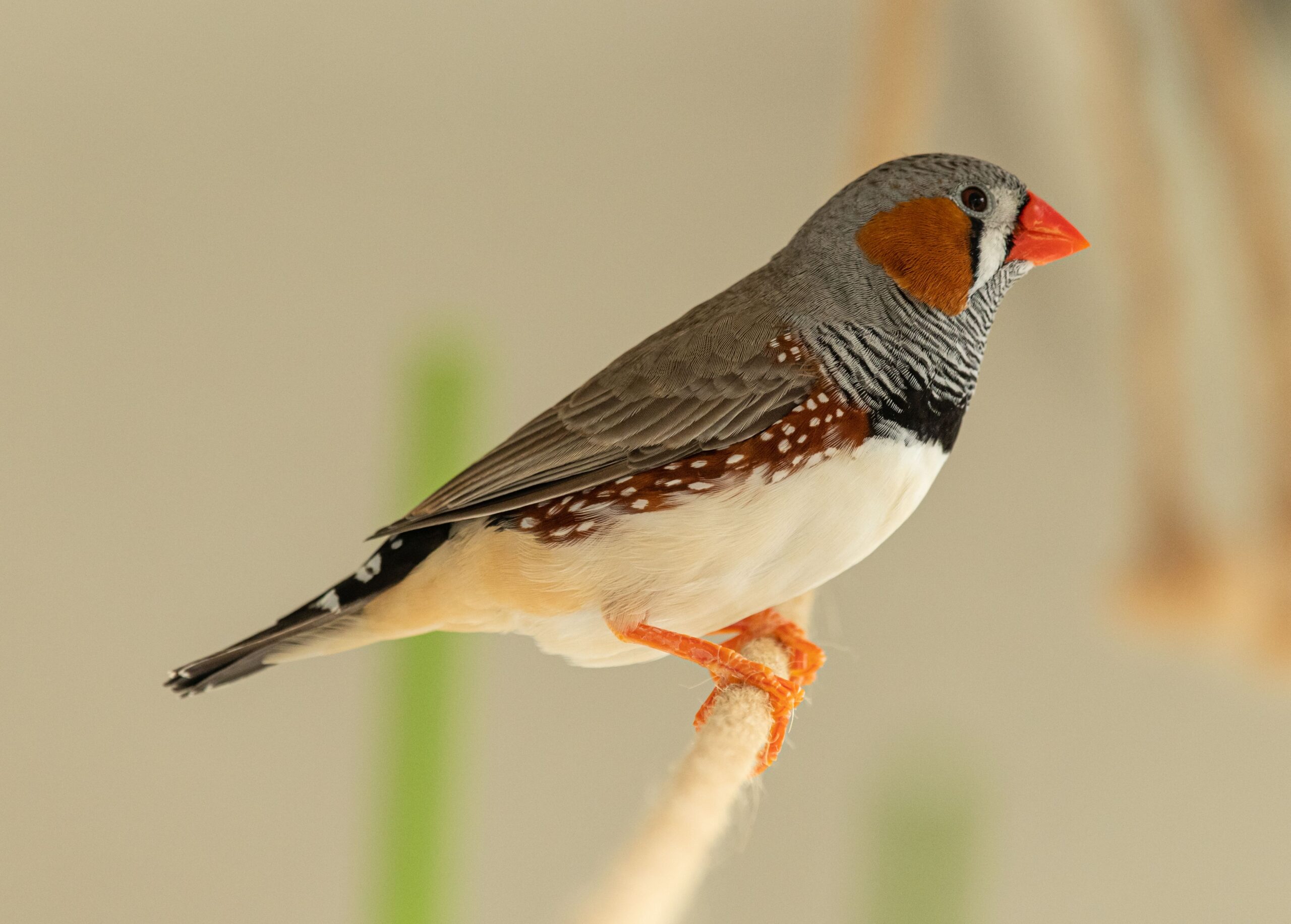
Seeing a bird with orange beak in your backyard, local park, or while hiking can be an exciting experience. But identifying the species isn’t always easy. Several North American birds have orange, reddish-orange, or orange-tipped bills, and their appearance can change depending on age, sex, season, and lighting.
If you’re searching for a bird with an orange beak, this guide will help you narrow down the possibilities. We’ll look at some of the most recognizable birds with orange beaks, their appearance, habitat, diet, and the clues you can use for identification.
Why Do Some Birds Have Orange Beaks?
A bird’s bill can have several important functions. Birds use their beaks to find and eat food, build nests, defend themselves, groom their feathers, and interact with other birds.
The orange color can come from natural pigments called carotenoids. In some species, the intensity of the color can vary with age, diet, health, breeding condition, and season.
That’s why identifying a bird shouldn’t depend on its beak color alone. Look at the bird’s size, body color, wing markings, tail shape, habitat, behavior, and location too.
15 Birds With Orange Beaks You May See
1. American Robin
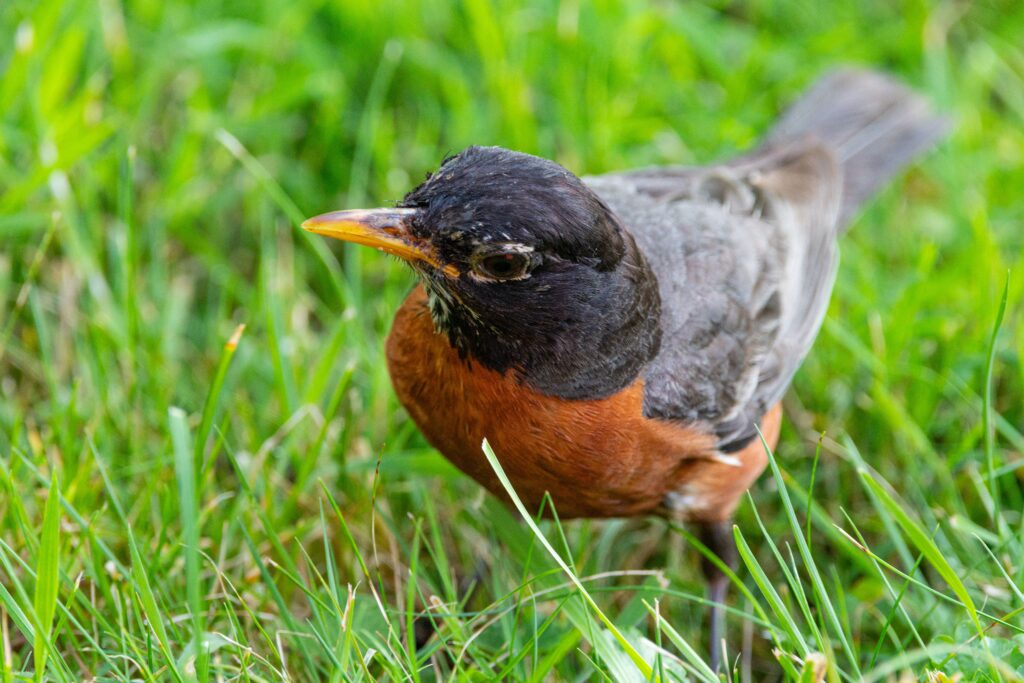
The American Robin is one of the most familiar backyard birds in the United States.
It has a distinctive orange-red breast, grayish back, dark head, and a slender yellowish-orange bill. Depending on lighting and distance, the bill can appear strongly orange.
Identification clues:
- Orange-red breast
- Gray-brown back
- Dark head
- Yellow-orange bill
- Relatively large songbird
American Robins commonly live around lawns, gardens, parks, forests, and suburban neighborhoods.
2. Cedar Waxwing
The Cedar Waxwing is a beautiful North American songbird recognized by its sleek body and distinctive markings.
Its bill can appear dark with a yellowish or orange tone depending on the bird and viewing conditions. It also has a yellow-tipped tail and a subtle black mask around the eyes.
Cedar Waxwings often travel in flocks and feed heavily on berries and fruit.
Look for: a smooth, silky-looking bird, black eye mask, yellow tail tip, and compact pointed bill.
3. Northern Cardinal
The Northern Cardinal is famous for its brilliant red plumage and bright orange-red bill.
Male cardinals are particularly easy to recognize because of their vivid red feathers, black facial mask, crest, and orange bill.
Females are more brownish but still have reddish highlights and an orange bill.
Quick identification:
- Male: bright red
- Female: warm brown with reddish accents
- Prominent crest
- Orange-red bill
- Long tail
If you see a bright red bird with an orange bill in your backyard, a Northern Cardinal is one of the first species worth considering.
Also Read : Top 8 Yellow Parrot Breeds That Will Brighten Your Home
Also Read : Top 5 Smartest Birds You Can Keep as Pets
4. Baltimore Oriole
The Baltimore Oriole is another colorful bird frequently seen in the eastern and central United States.
Adult males have bright orange underparts combined with black wings and a black head. Their bills are pointed and can have an orange-yellow appearance.
Baltimore Orioles are particularly associated with flowering trees, fruit, nectar, and backyard feeders.
If you see an orange-and-black bird with a pointed bill, the Baltimore Oriole could be a strong possibility.
5. American Oystercatcher
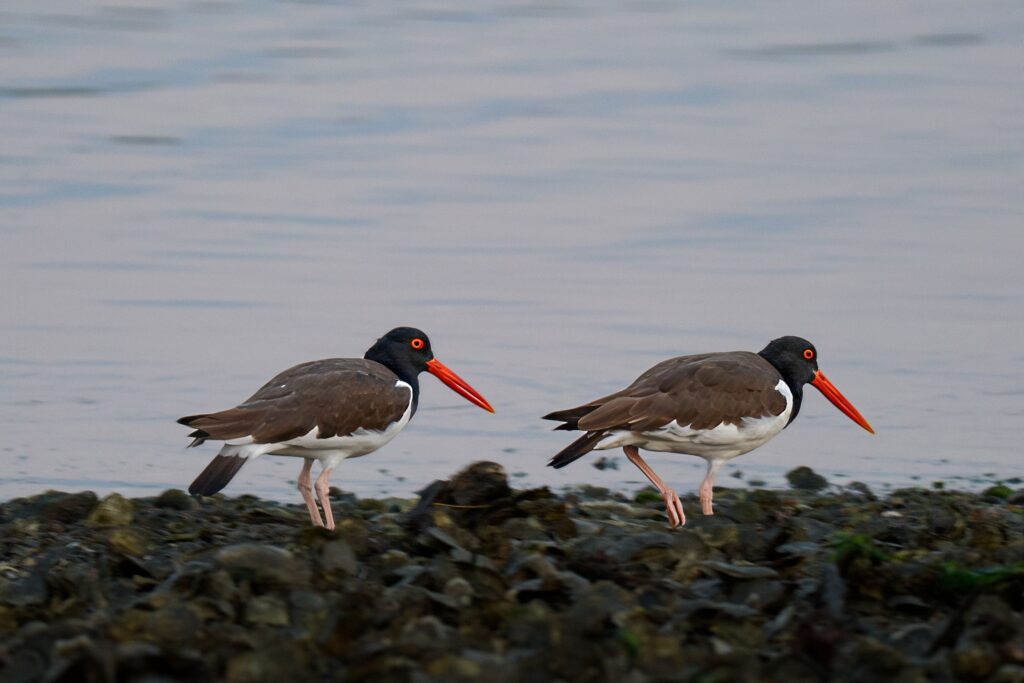
The American Oystercatcher is one of the easiest coastal birds to recognize.
It has a striking long, thick orange-red bill, pinkish legs, a dark head and back, and white underparts.
Unlike small backyard birds, the oystercatcher has a large, powerful bill adapted for opening and handling shellfish.
You’ll most likely encounter this species along sandy beaches, mudflats, salt marshes, and coastal areas.
6. Black Skimmer
The Black Skimmer has one of the most unusual bills among North American birds.
Its bill is brightly colored, with an orange-red base and a black tip. The lower mandible is longer than the upper mandible, giving the species its distinctive appearance.
Black Skimmers are coastal birds and can often be found around beaches, estuaries, lagoons, and other shallow-water habitats.
Their unusual bill helps them skim the surface of the water while searching for prey.
7. American White Pelican
The American White Pelican has a huge orange bill that makes identification relatively easy.
Adults are mostly white with black wing feathers visible during flight. Their enormous bills have a large expandable pouch used for catching food.
These birds are commonly found around lakes, wetlands, rivers, and coastal areas.
If you spot a very large white bird with an enormous orange bill, you’re likely looking at an American White Pelican.
8. Brown Pelican
The Brown Pelican is another North American bird with a large bill.
Adults have a long bill with a large throat pouch. The bill can show orange, yellow, or reddish coloration, particularly around the breeding season.
Brown Pelicans are strongly associated with coastal environments and are excellent swimmers and divers.
They are commonly seen along the Atlantic, Gulf, and Pacific coasts.
9. Common Merganser
The Common Merganser is a large diving duck found across much of North America.
Males have a white body, dark green head, and long, narrow reddish-orange bill. Females have a gray body, reddish-brown head, and similar bill shape.
Their long, serrated bills are adapted for catching fish.
Look for them around rivers, lakes, and other freshwater habitats.
10. Red-breasted Merganser
The Red-breasted Merganser is another diving duck with a reddish-orange bill.
Adult males have a greenish head, shaggy crest, reddish-brown breast, and distinctive patterned body.
Females are more gray and brown but still have the characteristic reddish bill.
They are commonly associated with coastal waters, lakes, and rivers.
11. Common Loon
The Common Loon is famous for its haunting call and striking black-and-white breeding plumage.
During the breeding season, adults have a long, straight bill that can appear dark with a pale or grayish tone rather than bright orange. However, under certain lighting, the bill may look warmer in color.
Because of this, don’t identify a Common Loon based solely on an orange-looking bill.
Its black head, white necklace, red eyes, and black-and-white body are much stronger identification clues.
12. Atlantic Puffin
The Atlantic Puffin is famous for its colorful breeding-season bill.
Its bill combines orange, yellow, and other bright colors, creating one of the most recognizable faces in the bird world.
However, Atlantic Puffins are not widespread across the continental United States. In the U.S., they are primarily associated with breeding colonies in Maine.
If you’re on the Maine coast and see a small black-and-white seabird with a colorful orange bill, an Atlantic Puffin is a possibility.
13. Black Guillemot
The Black Guillemot is a small seabird with a striking appearance.
During the breeding season, adults have mostly black plumage, white wing patches, and bright red-orange feet. Their bills can appear dark rather than strongly orange.
This is another example of why bird identification should use multiple characteristics rather than one feature.
They are associated with northern coastal waters.
14. House Finch
House Finches are common around neighborhoods, parks, gardens, and bird feeders throughout much of the United States.
Male House Finches are known for their reddish head and breast. Their bills are relatively short and conical and can sometimes appear warm or orange-yellow.
If you see a small finch with a red face around a backyard feeder, a House Finch may be worth considering.
15. Evening Grosbeak
The Evening Grosbeak is a striking finch with a large, powerful bill.
Its bill can have a pale yellowish or orange appearance, while males have a distinctive yellow-and-black body pattern.
Evening Grosbeaks are associated with forests and can sometimes appear at bird feeders.
Their large triangular bill is one of the best clues for identification.
How to Identify a Bird With Orange Beak
Finding an orange beak bird doesn’t automatically tell you which species you’ve seen. Use these clues to improve your identification.
1. Look at the Body Color
Is the bird red, black, white, brown, gray, blue, or a combination?
For example, a bright red bird with an orange bill could be a Northern Cardinal, while an orange-and-black bird could suggest a Baltimore Oriole.
2. Check the Bird’s Size
Compare the bird with familiar species.
Is it:
- Smaller than a sparrow?
- About the size of a robin?
- Similar to a crow?
- Much larger, like a pelican?
Size can eliminate many possibilities quickly.
3. Examine the Bill Shape
Bill shape is extremely useful.
A short conical bill may indicate a seed-eating bird. A long pointed bill can suggest a bird that catches insects or fish. A huge bill with a pouch immediately points toward a pelican.
4. Consider Your Location
Location matters enormously when identifying birds with orange beaks.
A bird found on a Maine coastline could be very different from one seen in a California backyard or Florida wetland.
Ask yourself:
- What state am I in?
- Was the bird near water?
- Was it in a forest?
- Was it in my backyard?
- Was it on the beach?
5. Pay Attention to Behavior
Behavior can provide another important clue.
Was the bird:
- Eating berries?
- Diving into water?
- Searching the ground?
- Hanging around a feeder?
- Flying in a flock?
- Walking along the beach?
These details can make identification much easier.
Birds With Orange Beaks in Different Habitats
Backyard
In residential areas, you might encounter Northern Cardinals, American Robins, House Finches, and other common songbirds.
Beaches and Coasts
Coastal environments offer a completely different selection, including American Oystercatchers, Black Skimmers, Brown Pelicans, and other seabirds.
Lakes and Rivers
Look for species such as Common Mergansers, Red-breasted Mergansers, loons, and pelicans.
Forests
Forest habitats can contain finches, grosbeaks, woodpeckers, and many other species whose bills may appear orange, yellow, or reddish.
What Does an Orange Beak Mean?
An orange bill can serve several purposes.
In some species, bright bill coloration plays a role in attracting mates or communicating with other birds. In other birds, bill color is simply a natural characteristic of the species.
Bill color can also change with age, season, and breeding condition.
Therefore, if you see a bird with orange beak, don’t assume that every orange-billed bird belongs to the same species.
Why Bird Identification Can Be Difficult
Bird identification isn’t always straightforward.
Juvenile birds can look dramatically different from adults. Males and females may have different plumage, while seasonal changes can alter a bird’s appearance.
Lighting also matters. A yellow bill may appear orange in warm evening light, while an orange bill may look yellow from a distance.
That’s why the best approach is to combine several characteristics rather than relying on bill color alone.
Frequently Asked Questions
What bird has an orange beak?
Several species can have orange or reddish-orange bills, including Northern Cardinals, American Oystercatchers, Black Skimmers, pelicans, mergansers, and other North American birds.
What is a black bird with an orange beak?
A black-and-white or mostly black bird with a noticeable orange bill could belong to several species. Location, body pattern, size, and habitat are important for narrowing it down.
What red bird has an orange beak?
The Northern Cardinal is one of the best-known examples. Adult males have bright red plumage and a prominent orange-red bill.
What white bird has an orange beak?
American White Pelicans are a prominent example. They are large white birds with enormous orange bills and are commonly found near lakes and wetlands.
Are birds with orange beaks common in the USA?
Yes. The United States has numerous bird species with orange, reddish-orange, yellow-orange, or similarly colored bills. The exact species you’ll encounter depends heavily on your region and habitat.
How can I identify a bird with an orange beak?
Start by recording its size, body color, bill shape, tail pattern, habitat, location, and behavior. A clear photograph can also make identification much easier.
Final Thoughts
If you’ve spotted a bird with orange beak, don’t rely on the bill color alone. Look at the entire bird and consider its size, plumage, bill shape, behavior, habitat, and geographic location.
From the familiar Northern Cardinal and American Robin to coastal species such as the American Oystercatcher and Black Skimmer, the United States is home to many fascinating birds with orange beaks.
The more identification clues you collect, the easier it becomes to determine exactly which bird you’ve discovered.