Bringing a dog home is exciting, but it can also come with a learning curve.
A new dog may jump on guests, pull on the leash, bark at every little noise, chew things they shouldn’t, or simply ignore you when you call their name. That doesn’t necessarily mean your dog is stubborn or badly behaved. In many cases, they simply haven’t learned what you expect from them yet.
That’s where dog training comes in.
Training isn’t just about teaching your dog to sit or stay. It’s about building communication, confidence, good manners, and a stronger relationship between you and your dog.
The good news? You don’t need to be a professional dog trainer to get started.
With consistency, patience, and the right approach, most owners can teach their dogs useful skills at home.
This beginner’s guide explains how to get started with dog training, which commands to teach first, how positive reinforcement works, common mistakes to avoid, and how to keep training sessions enjoyable for both of you.
Why Is Dog Training Important?
Training gives your dog a clear understanding of what behaviors are appropriate.
A well-trained dog is generally easier to manage at home and in public. Simple skills such as coming when called, walking calmly on a leash, and staying when asked can make everyday situations much easier.
Training can also provide mental stimulation.
Dogs naturally enjoy learning and solving problems. Short training sessions give them something constructive to focus on instead of finding their own entertainment—such as chewing shoes or digging up the yard.
Perhaps most importantly, training helps you and your dog communicate.
Your dog doesn’t automatically understand human rules. They have to learn what words, gestures, and behaviors mean. Training creates a common language between you.
When Should You Start Training a Dog?
The simple answer is: as soon as possible.
Puppies can begin learning simple behaviors at a young age, while adult and senior dogs can also learn new skills. You don’t need to wait until your dog reaches a certain age.
However, training should be appropriate for your dog’s age, temperament, and experience.
For puppies, early lessons can focus on:
- Responding to their name
- Potty training
- Gentle handling
- Basic commands
- Crate training
- Appropriate chewing
- Socialization
- Walking on a leash
Adult dogs may need additional work on habits they’ve already developed.
The important thing is not to become frustrated if progress isn’t immediate. Dogs learn at different speeds.
Start With the Basics
If you’re completely new to dog training, don’t try to teach everything at once.
Start with a few fundamental behaviors.
1. Teach Your Dog Their Name
Your dog’s name should mean something positive.
Say their name in a cheerful voice. When they look toward you, reward them with praise or a small treat.
Repeat this several times throughout the day.
Eventually, your dog should learn that hearing their name means they should pay attention to you.
2. Teach “Sit”
Sit is one of the easiest commands for many dogs to learn.
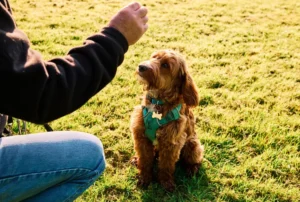
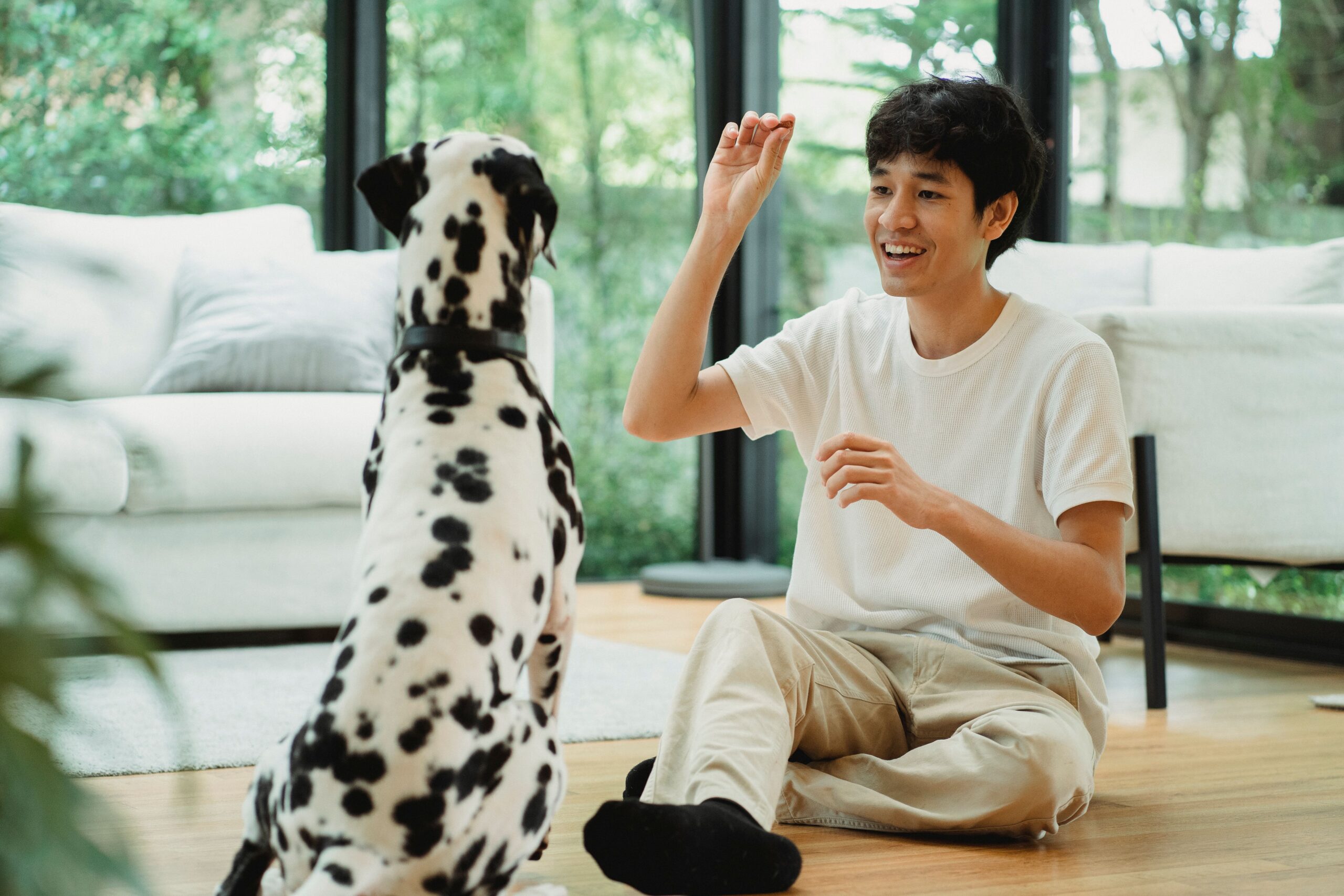
Hold a small treat near your dog’s nose and slowly move your hand upward and slightly backward. As your dog follows the treat, their bottom may naturally move toward the floor.
The moment they sit, reward them.
Once they understand the movement, introduce the word “sit” before the behavior.
Keep practicing until your dog begins responding to the verbal cue.
3. Teach “Stay”
Once your dog understands sit, you can begin working on stay.
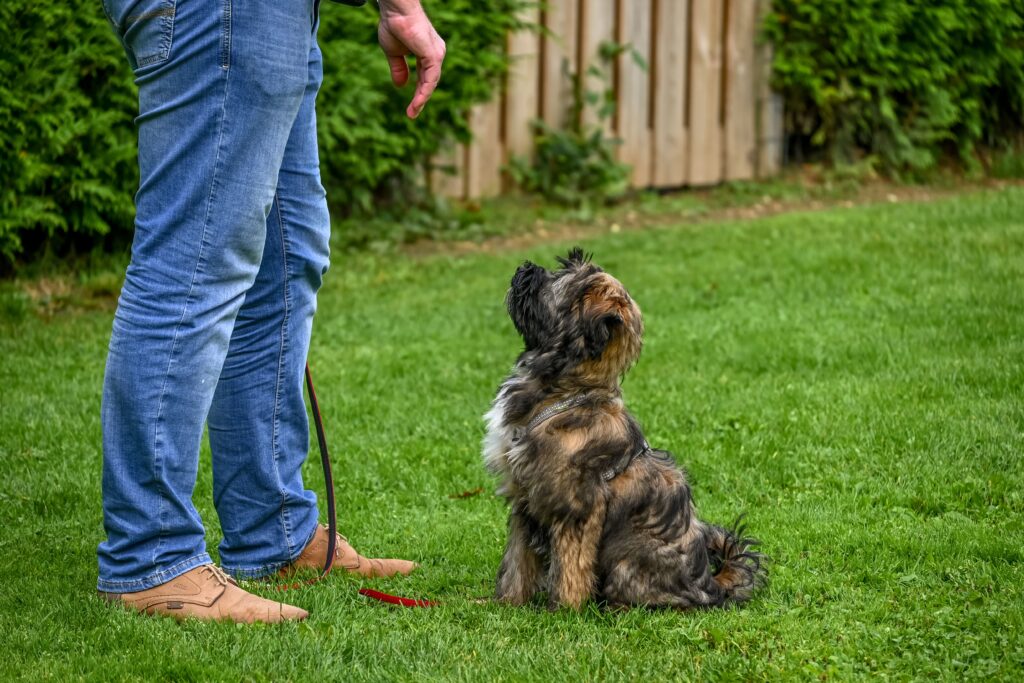
Ask your dog to sit. Then show an open hand and say “stay.” Wait for a very short moment, then reward them while they’re still in position.
Gradually increase the amount of time and distance.
Don’t rush this exercise. If your dog gets up, simply reset and make the next attempt easier.
4. Teach “Come”
A reliable recall can be extremely useful.
Start indoors or in another safe, low-distraction area.
Say your dog’s name followed by “come” in an enthusiastic voice. When your dog moves toward you, reward them generously.
Never use the recall command to consistently signal something your dog dislikes, such as punishment.
You want your dog to associate coming to you with good things.
Also: Why Do Dogs Love Belly Rubs So Much? What Your Dog Is Really Trying to Tell You
Positive Reinforcement: A Better Way to Teach
One of the most useful concepts for beginners is positive reinforcement.
Positive reinforcement means rewarding a behavior you want your dog to repeat.
The reward might be:
- A small food treat
- Verbal praise
- Petting
- A favorite toy
- Playtime
- Access to something your dog enjoys
For example, if your dog sits when you ask, you reward the sit.
Over time, your dog learns:
“When I do this behavior, something good happens.”
This makes the behavior more likely to happen again.
The timing of the reward matters. Try to reward your dog immediately after the desired behavior so they can make the connection.
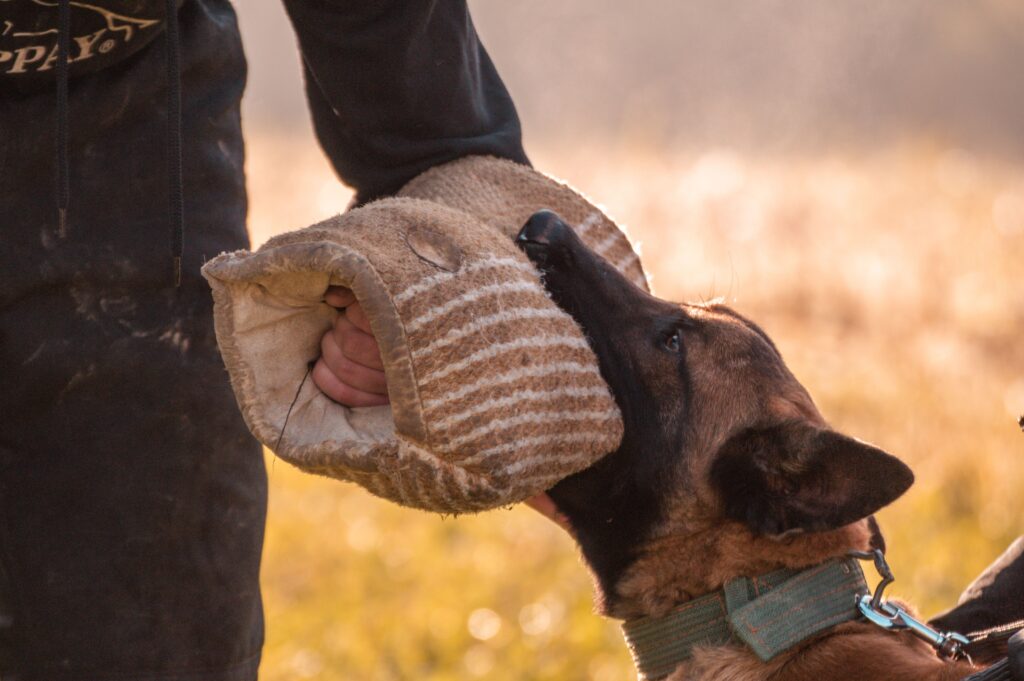
Keep Training Sessions Short
One of the biggest mistakes beginners make is training for too long.
Dogs can lose focus, especially when they’re learning something new.
Instead of one long session, try several short sessions throughout the day.
For example:
Morning: 5 minutes of basic commands
Afternoon: 5 minutes of leash practice
Evening: 5 minutes of recall or manners
The exact amount of time isn’t as important as keeping your dog engaged and successful.
End the session while your dog is still interested.
Training should feel like an activity your dog wants to participate in—not a chore they need to endure.
How to Train a Dog to Walk on a Leash
Leash training can take patience.
Many dogs naturally want to explore everything around them. That can lead to pulling, zigzagging, or constantly stopping.
Start somewhere with relatively few distractions.
Reward your dog when they walk near you without pulling.
If your dog begins pulling, avoid turning the situation into a tug-of-war. Instead, stop or change direction and reward them when they return their attention to you.
As your dog improves, gradually practice in environments with more distractions.
Remember that loose-leash walking is a skill. Your dog may need plenty of repetition before it becomes a habit.
Potty Training Basics
House training is one of the first challenges many new dog owners face.
A consistent routine can make the process much easier.
Take your puppy outside:
- After waking up
- After eating or drinking
- After playing
- Before bedtime
- At regular intervals throughout the day
When your puppy eliminates in the appropriate place, praise and reward them immediately.
Accidents are normal during the learning process.
If you discover an accident, don’t punish your dog after the fact. They are unlikely to understand why you’re upset.
Instead, clean the area thoroughly and focus on preventing future accidents through better supervision and scheduling.
How to Stop Unwanted Behaviors
Training isn’t only about commands.
You may also need to address behaviors such as:
- Jumping on people
- Excessive barking
- Chewing furniture
- Digging
- Begging
- Pulling on the leash
- Stealing objects
- Chasing things
The first step is to understand why the behavior is happening.
For example, a dog may bark because they’re excited, fearful, frustrated, seeking attention, or reacting to something in their environment.
Simply telling the dog “no” doesn’t necessarily teach them what to do instead.
Whenever possible, teach an alternative behavior.
If your dog jumps on visitors, for example, you can work toward teaching them to keep four paws on the floor or sit when someone approaches.
Socialization Is Part of Dog Training
Socialization is especially important during puppyhood, but it doesn’t mean forcing your dog to interact with every person or animal they encounter.
The goal is to help your dog become comfortable around different sights, sounds, environments, people, and appropriately selected animals.
Positive experiences can help build confidence.
Expose your dog gradually and at a pace they can handle.
If your dog appears frightened or overwhelmed, increase the distance or move to a quieter environment.
A confident dog isn’t necessarily one who wants to greet everyone. A well-socialized dog can learn to remain calm in different situations.
Common Dog Training Mistakes
Even well-intentioned owners can accidentally make training harder.
Expecting Too Much Too Soon
Your dog won’t master a new command after a handful of repetitions.
Give them time to learn.
Repeating Commands
If you repeatedly say “sit, sit, sit, sit,” your dog may learn that the first command doesn’t matter.
Give the cue once, then help your dog succeed.
Inconsistent Rules
If jumping on the couch is forbidden today but allowed tomorrow, your dog receives mixed signals.
Everyone in the household should follow the same basic rules.
Training Only When Something Goes Wrong
Training shouldn’t happen only when your dog misbehaves.
Regular practice helps maintain learned behaviors.
Using Punishment Out of Frustration
Getting angry can make training stressful and may damage your dog’s trust in you.
Instead, focus on managing the environment, preventing unwanted behavior, and reinforcing the behavior you want.
How Long Does Dog Training Take?
There’s no universal timeline.
Some behaviors may improve within days, while others can take weeks or months of consistent practice.
Factors that affect progress include:
- Your dog’s age
- Breed and individual temperament
- Previous training
- Motivation
- Environment
- Consistency
- Difficulty of the behavior
- Amount of practice
Think of dog training as an ongoing process rather than a course with a final graduation day.
Even dogs that know basic commands benefit from regular mental stimulation and reinforcement.
When Should You Hire a Professional Dog Trainer?
Many basic skills can be taught at home, but professional help can be valuable in certain situations.
Consider working with a qualified trainer or behavior professional if you’re struggling with serious or persistent problems such as:
- Aggression
- Severe fear
- Resource guarding
- Serious separation-related problems
- Dangerous reactivity
- Behavior that puts people or animals at risk
A professional can observe what’s happening and help develop a training plan appropriate for your dog.
If you’re choosing a trainer, ask about their training methods and experience. Look for someone who prioritizes humane, reward-based training and can clearly explain how they’ll address your dog’s specific needs.
A Simple Beginner Dog Training Schedule
If you’re not sure where to start, here’s a simple routine.
Week 1
Focus on:
- Name recognition
- Sit
- Attention
- Basic household rules
- Potty routine
Week 2
Add:
- Stay
- Come
- Down
- Leash practice
Week 3
Work on:
- Longer stays
- Recall
- Loose-leash walking
- Polite greetings
Week 4
Introduce more distractions.
Practice the behaviors you’ve already taught in different rooms, outdoors, and eventually in appropriate public environments.
Don’t worry if your dog needs more than four weeks. The schedule is simply a starting point.
Frequently Asked Questions About Dog Training
What is the best age to start dog training?
You can begin training as soon as you bring your dog home. Puppies can learn simple behaviors early, while adult dogs can also learn new skills.
What is the easiest command to teach a dog?
“Sit” is often a good starting point because many dogs naturally perform the movement when following a treat. However, individual dogs learn differently.
How many minutes a day should I train my dog?
Short sessions are usually easier for dogs to handle. Several brief sessions throughout the day can be more productive than one long session.
Is positive reinforcement effective for dog training?
Positive reinforcement can be highly useful because it rewards behaviors you want your dog to repeat. The key is consistent timing, appropriate rewards, and clear communication.
Can an older dog still be trained?
Yes. Older dogs can learn new behaviors. You may need to account for their previous habits, physical abilities, and individual learning pace.
What should I do if my dog doesn’t listen?
First, consider whether the environment is too distracting or the behavior is too difficult. Return to an easier version of the exercise, reward successful responses, and gradually increase the difficulty.
Final Thoughts
Good dog training isn’t about creating a perfectly obedient dog.
It’s about helping your dog understand what you expect while giving them the skills and confidence to succeed.
Start with simple behaviors. Keep sessions short. Reward the behaviors you want. Practice consistently, and don’t expect perfection overnight.
Most importantly, remember that your dog is learning from you just as much as you’re learning about them.
The small five-minute training sessions you do today can eventually make everyday life—walks, visitors, trips, and time at home—much easier for both of you.
And once your dog has mastered the basics, there’s plenty more to explore, from reliable recall and loose-leash walking to advanced obedience and fun enrichment activities.
Dog training is a process, not a one-time event. Stay patient, stay consistent, and celebrate the small wins along the way.